How Much Does Rhinoplasty (nose job) Cost in Thailand in AUD?
Rhinoplasty in Thailand typically costs between AUD $2,838 / ฿A96,489 and AUD $4,683 / ฿A159,206. Final prices depend on the surgical technique, such as open or closed approaches, and the surgeon's experience. In Australia, the same procedure averages AUD $19,865 / ฿A675,421, meaning patients can save approximately 81%. Standard Thai packages usually include surgical fees, anaesthesia, preoperative blood tests, and airport transfers.
Open rhinoplasty: AUD $4,115 / ฿A139,909 to AUD $5,676 / ฿A192,977 for complex structural reshaping.
Closed rhinoplasty: AUD $1,561 / ฿A53,069 to AUD $3,264 / ฿A110,962 for adjustments with no external scarring.
Revision rhinoplasty: AUD $3,689 / ฿A125,435 to AUD $6,953 / ฿A236,397 to correct previous surgical results.
Tip rhinoplasty: AUD $1,703 / ฿A57,893 to AUD $2,554 / ฿A86,840 focusing solely on the nasal tip.
Ultrasonic rhinoplasty: AUD $3,547 / ฿A120,611 to AUD $5,676 / ฿A192,977 using precise vibration for bone reshaping.
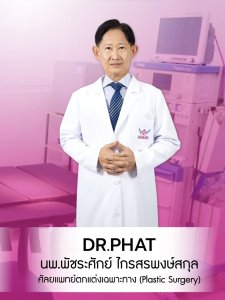
Bookimed Expert Insight: Thai clinics offer significant value through comprehensive recovery bundles. Packages at ID Clinic Bangkok start around A$4,550. These include three hotel nights and diagnostic tests like ECGs and HIV screenings. Choosing JCI-accredited facilities provides extra peace of mind for Australians. Asia Cosmetic Hospital maintains this accreditation and offers scar-free techniques. For complex cases, seeking board-certified surgeons like Dr Phatcharasak Kraisornphongsakul protects your investment.
Data verified by Bookimed as of June 2026, based on patient requests and official quotes from 452 clinics worldwide. Median costs are based on real invoices (2025–2026) and updated monthly. Actual prices may vary.
Best Rhinoplasty (nose job) Clinics in Thailand for Australians: 6 Verified Options and AUD Prices
**Asian Rhinoplasty**: This surgery reshapes the nose to achieve a natural, harmonious look, often using implants or cartilage grafts, with a focus on cultural and aesthetic preferences.
Reshaping the nose to enhance facial harmony while respecting and preserving the patient"s unique ethnic features, ensuring a natural-looking result with careful treatment planning and recovery guidance.
A procedure to use injectable fillers to reshape and contour the nose, offering immediate results with minimal recovery time, perfect for those seeking subtle enhancements.
Reshaping a rounded nasal tip by refining cartilage and tissue, enhancing facial harmony, with recovery typically involving mild swelling and downtime.
This surgical procedure reshapes the nose by narrowing and refining the nasal structure, enhancing facial harmony and often leading to improved breathing and self-confidence.
How to find best offer with Bookimed?
Discover options on the website: deals, clinics, and doctors.
Select your favourites.
Share photos or describe your issue.
Send a request.
Receive free offers for your needs with prices and details.
Compare and finalise your choice.
Book your clinic visit.
Pay at the clinic. Bookimed fees are $0 for you.
From start to finish, the Bookimed coordinator keeps you safe and comfortable during your medical journey.
100% free, non-binding assessment of your case after photos download.
Instant FREE personalised offers to make the right choice.
Expert guidance in choosing the perfect Plastic Surgery doctor and clinic.
Special packages and exclusive prices for our patients.
24/7 Bookimed guidance at no cost, guaranteed.
Hassle-free translation of your medical documents for clinics.
Multilingual staff — no language barrier with Bookimed coordinator.
Bookimed ensures transparent and secure payments. Patients pay at the clinic with no additional fees.
28 years of experience • 15000+ treatments performed
Dr Tanongsak Panyawirunroj has performed over 900 cosmetic procedures and holds specialised certification in rhinoplasty and facial surgery from JW Hospital in South Korea.
Completed advanced training in craniofacial and cosmetic surgery in Taiwan
Selected as an official representative of the Korean Society of Plastic Surgeons
Expertise in pediatric plastic surgery gained at IWK Children’s Hospital in Canada
Founding Director of Asia Cosmetic Hospital with a focus on reconstructive artistry
Holds a diploma in plastic surgery from Thailand's prestigious Siriraj Hospital
900 plus successful treatments performed – Dr Jiraroch Meevassana is a plastic surgery specialist at Wansiri Hospital with a heavy focus on facial reconstruction.
Trained at the ASAN Medical Rhinoplasty Forum, a leading centre for nasal surgery
Specialises in open rhinoplasty using rib cartilage grafts for structural support
Expert in facial feminisation techniques, including bone shaving and contouring
Completed microvascular surgery training at Rajavithi Hospital in Thailand
Certified in Advanced Trauma Life Support by the American College of Surgeons
Video Stories from Bookimed Patients
Moraza
Sometimes you've gotta chase those dreams, even if they lead you halfway across the globe.
Procedure: Rhinoplasty (nose job)
Elissa
It’s definitely a lengthy process, but I'm excited to watch the results emerge!
Procedure: Rhinoplasty (nose job)
Reviews about Bookimed: Discover Patients' Insights
My biggest concern was that the result might look unnatural or that my breathing might be affected. Neither of these things happened. In fact, my breathing is now even better than before. During the open rhinoplasty, a small bump was removed and the bridge of my nose is now, even so soon after the procedure, already straighter, just as I wanted. In addition, the tip of my nose already looks much more defined. The staff and the surgeon were consistently supportive and answered all my questions patiently, which gave me a great deal of reassurance. I felt I was in good hands.
Very simple and straightforward
Anonymous • Rhinoplasty (nose job)
United Kingdom
15 Mar 2025
Verified review.
I'm still healing from my surgery but so far I'm very happy with the result and would recommend the hospital and clinic, and would like to reassure anyone going abroad that you'll be in good hands!
Had a rhinoplasty at B care hospital and the care the team provided was amazing. Just wanted to write this to reassure anyone looking into it, as my family were concerned about me heading out to Thailand to have the procedure as a lot of families would be.
The hospital and clinic were sparkling clean. The co-ordinator, nurse and doctor were all just lovely and very attentive to my needs. There was no difficulty communicating with the doctor who went through exactly what would be done during the procedure.
One thing I was happy about was the 2 nights in hospital - other places I looked at only gave you one night, or even home the same day. Being sleepy after the surgery, I wouldn't have wanted to go back to my accom the same day. I was grateful I had the lovely nurse Mariko looking after me. Also the room at the hospital was lovely - spacious and bright with a nice en suite and all the facilities you would need.
I also realised I had tonsillitis on the day I left the hospital (I think I got it before I even had the surgery) and the team were very caring and made sure I had all the medications I needed for that too, before going back to my accommodation.
I'm still healing from my surgery but so far I'm very happy with the result and would recommend the hospital and clinic, and would like to reassure anyone going abroad that you'll be in good hands! Bookimed were also really good at keeping in touch and my coordinator Marsela was patient while I took my time to decide if I was going to go ahead with the procedure in the first place, and was always there to answer any questions I had. All very much appreciated!
Peter Tin Shouk Fong • Rhinoplasty (nose job)
Australia
1 Dec 2024
Verified review.
I'm very impressed with the outcome
I'm very impressed with the outcome. Bookimed assistant was helpful and arrange a virtual consultation with the consultant. While English was not his strong fort, his expertise made up for it. The staff, especially Margi was extremely valuable as she speaks fluently English. Her knowledge and expertise was well appreciated as well as her care and attentiveness. The staff was nice. I did rhinoplasty and liposuction and I'll very impressed with the outcome. Post op care was provided. The nose did not hurt post op in comparison with the liposuction, which was quite uncomfortable. Not painful, numb and tender I suppose. As to the cost, it's fairly competitive.
The expertise
More English speakers would have been nice.
About Bookimed service
I like how bookimed was who set me up with the clinic. Otherwise I wouldn't have know about it.
Winfried Lejarde • Rhinoplasty (nose job)
Canada
14 Mar 2026
Verified review.
It is obvious they have great communication and dedication to their patients
I want to say a massive thank you to Queen my medical coordinator who help me to the entire process until the surgery day, also ID Clinic to Dr. Phatcharasak, and Mai, the entire staff from the nurses, front desk to the specialists worked together seamlessly to coordinate my surgery and care. It is obvious they have great communication and dedication to their patients.
Medical staff well organized
About Bookimed service
My medical coordinator Queen is amazing, she help me to all my query since day one till my surgery day she very supportive. Once again thank you
Anonymous • Rhinoplasty (nose job)
Australia
25 May 2025
Verified review.
The language needs to be improved for translation. The doctor needs to spend more time with clients explaining the procedures that will happen. The after care is very intermediate. Any issues raised is hard to explain because of the language difference. A staff are wonderful however I’m not sure about the qualifications felt like I was in an abattoir. Still waiting to see surgeon back in home country as cast taken off to soon and nose is out of shape . Rather concerned but I guess you get what you pay for
The staff are wonderful, but again, not sure about the qualification
Language communication with the consultation very poor and only seen us for three minutes. Photo of what I was expecting. Outcome doesn’t look anything like I specified. When raised with the surgeon was told once again with poor English that it was swelling and a nod of head that all is ok..
About Bookimed service
This is very far from what the photos and staff on booking IMED presented. It felt like a very rough area, hygiene had a lot to stand up for western standard , again staff are wonderful but the language barrier is unbearable when you are getting surgery and worries about certain things that just can’t be answered due to language barriers
Anonymous • Rhinoplasty (nose job)
Canada
23 Dec 2024
Verified review.
I just loved it very much
I was so pleased to choose this connection and this clinic for my nose job , the Doctor and staff they were beyond helpful, to make this much more comfortable for me .
The best was only one building between my hotel to stay which also was perfect to stay 👌 and clinic .
I couldn't believe how it could be very convenient to visit the doctor after surgery.
I just loved it very much .
And very appreciate of bookiimed.com 😊😊😊
The distance between hotel and clinic made very happy 😊
Absolutely nothing.
Every things was perfect 🥰
Trevor • Rhinoplasty (nose job)
Singapore
3 Jan 2026
Verified review.
I was assured of the professionalism of the doctor and staff and this made me felt more confident of the operation success
I always have doubts on surgery in Bangkok for safety and success level of each operation. However, during the whole process, I was assured of the professionalism of the doctor and staff and this made me felt more confident of the operation success.
1. The staff at the clinic were helpful most of the time, especially if you travel alone. They will provide some helpful insights before and after operation. 2. Operation was smooth in a clean and organized clinic.
1. Transport arrangement maybe limited as there is only one driver.
About Bookimed service
The officer in charge of my case answered my questions whenever I was in doubt. She made my journey felt assured.
Anonymous • Rhinoplasty (nose job)
New Zealand
25 Sept 2025
Verified review.
Very very pleased
Everyone (doctors & staff) were incredibly attentive during my rhinoplasty procedure. I felt heard from the minute I had my consult to the minute I left after my final appointment.
The staff were always available and my result was exactly what o wanted.
Very very pleased
The doctor listened & the staff were extremely approachable and pro active. The facilities were clean, modern and I felt comfortable throughout.
There was nothing I didn’t like but I feel like a slightly better hotel would make the experience nicer although the staff there were lovely and the place was clean.
About Bookimed service
They were extremely attentive during booking and even after my procedure. It was easy and seamless.
RITA • Rhinoplasty (nose job)
Singapore
26 Apr 2025
Verified review.
Dr n staff were nice and attentive tho
I am still recovering from my rhinoplasty. However I would like to go back again for a second review as I feel my nose still hasnt shaped up well yet. Will wait 6 months before seeing the results and go back for a review n re-do my nose again if necessary. Dr n staff were nice and attentive tho
The surgery was not as painful as I expected. It was done quite nicely.
The stitches removal wasnt done thoroughly. I still had abit of stitch left inside, which i removed after coming back.
About Bookimed service
Its been a good and helpful channel. Honest communication as well. Support was good.
Dragan Markov • Rhinoplasty (nose job)
Australia
16 May 2024
Verified review.
Thank you for your hospitality
I thought the level of service was exceptional from collecting the patient from the hotel to driving them back was a nice touch.
Looking after the patient (me) to see if I was hungry or thirsty was fantastic service.
All staff are great and respectful.
Thank you for your hospitality.
When the bandages came off and saw my result for the first time.
A little more patience and empathy with the customer to understand stages as it’s an overwhelming experience and life changing process.
About Bookimed service
Once booking and price were confirmed nothing changed.
Lucia Helena • Mini Facelift
Indonesia
23 Sept 2022
Verified review.
"It was great to have the help of bookimed!! I was trying to book elsewhere and there was no answer
It was great to have the help of bookimed!! I was trying to book elsewhere and there was no answer. Only with bookimed it was possible. The professional that helped me was very attentive and supportive all the way… thank you so much:-)
About Bookimed service
100%
Anonymous • Rhinoplasty (nose job)
Australia
7 Nov 2024
Verified review.
Fantastic doctor and staff put my mind at ease prior to my procedure
Fantastic doctor and staff put my mind at ease prior to my procedure. Couldn’t be any more thank ful
Doctor and staff
A little more follow up after surgery
About Bookimed service
Best thing I did thank you so much for you recommendation
A certified medical writer with 10+ years of experience, developed Bookimed’s trusted content, backed by a Master’s in Philology and medical expert interviews worldwide.
General practitioner. Winner of 4 scientific awards. Served in Western Asia. Former Team Leader of a medical team supporting Arabic-speaking patients. Now responsible for data processing and medical content accuracy.
This page may feature information relating to various medical conditions, treatments, and healthcare services available in different countries. Please be advised that the content is provided for informational purposes only and should not be construed as medical advice or guidance. Please consult with your doctor or a qualified medical professional before starting or changing medical treatment.
Our Rhinoplasty (nose job) Techniques: What Suits You Best?
When considering Rhinoplasty (nose job), it’s important to understand the different techniques and which is best suited for you. Here’s a concise comparison of popular options:
Revision Rhinoplasty
Revision rhinoplasty is a surgical procedure to correct or enhance the results of a previous nose surgery.
Pros: Addresses previous surgery issues with precision, improving breathing in 70% of patients. Offers enhanced facial symmetry compared to initial rhinoplasty.
Cons: Longer recovery than tip rhinoplasty, with potential for increased swelling. Requires skilled surgeons, limiting options for some patients.
Effectiveness: 85% success rate in achieving desired aesthetic and functional outcomes.
Duration: 3-4 hours
Recovery: About 2-3 weeks for initial recovery, with full healing in 6-12 months.
Prices: Cost of Revision rhinoplasty in Thailand from AUD $3,658
Tip Rhinoplasty
This procedure focuses on reshaping the nasal tip for improved aesthetics or function.
Pros: Less invasive than open rhinoplasty, with reduced swelling and shorter recovery. Offers precise results for nasal tip refinement.
Cons: Limited to the tip area, might not address broader nasal issues like closed or open rhinoplasty could.
Effectiveness: Success rate of 85-90% in achieving desired tip refinement.
Duration: 1-2 hours
Recovery: 5-7 days
Best for: Nasal tip asymmetry, bulbous tip, over-projected tip correction.
Prices: Cost of Tip rhinoplasty in Thailand from AUD $1,635
Closed Rhinoplasty
Closed rhinoplasty is a nasal surgery technique where incisions are made inside the nostrils, leaving no visible scars.
Pros: No external scars, shorter operating time, and reduced swelling compared to open rhinoplasty. It preserves nasal structure better than alarplasty.
Cons: Limited access to nasal structures, making complex revisions challenging. Not suitable for ultrasonic rhinoplasty precision.
Effectiveness: 85-90% success rate in achieving desired aesthetic outcomes.
Duration: 1-2 hours
Recovery: 1-2 weeks
Best for: Minor nasal tip adjustments and dorsal hump reduction. Enhances facial symmetry.
Prices: Cost of Closed rhinoplasty in Thailand from AUD $1,506
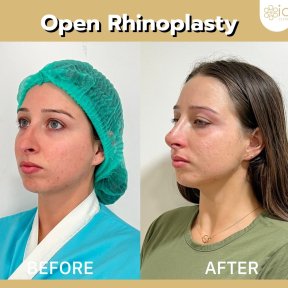
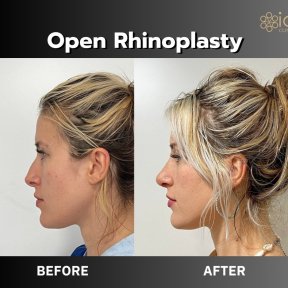
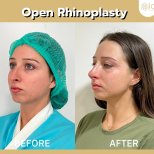
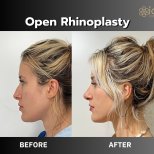
Open Rhinoplasty
A surgical procedure allowing complete access to nasal structures for reshaping.
Pros: Offers precise modifications and visibility. Up to 95% accuracy in achieving desired nasal shape. Allows for extensive structural work not possible in closed rhinoplasty.
Cons: Longer recovery time due to external incision. Scarring risk, although minimal, is higher than closed rhinoplasty.
Effectiveness: Success rate is approximately 85-90% for achieving cosmetic goals.
Duration: 3-4 hours
Recovery: 1-2 weeks for initial recovery, with complete healing in 6-12 months.
Best for: Complex nasal deformities, major structural changes, and detailed aesthetic enhancements.
Prices: Cost of Open rhinoplasty in Thailand from AUD $4,044
Ultrasonic Rhinoplasty
Utilizes ultrasonic technology to reshape the nose with precision and minimal trauma.
Pros: Less bruising and swelling than traditional methods. Precise bone sculpting reduces tissue damage by 30%.
Cons: Limited availability of experienced surgeons. May not address complex nasal deformities effectively.
Effectiveness: 85% success rate in achieving desired nasal structure.
Duration: 1-3 hours
Recovery: 7-10 days
Best for: Enhancing nasal symmetry and contour with minimal invasiveness.
FAQ about Rhinoplasty (nose job) in Thailand
These FAQs come from real patients seeking medical assistance through Bookimed. Answers are given by experienced medical coordinators and trusted clinic representatives.
Is it safe to get a nose job in Thailand?
Thailand is safe for rhinoplasty when performed at JCI-accredited hospitals by board-certified plastic surgeons. The country is a global hub where specialists like Dr Tanongsak Panyawirunroj at Asia Cosmetic Hospital have performed over 15,000 procedures, adhering to international safety protocols and sterile theatre standards.
Surgeon credentials: Top specialists hold certifications from the Society of Plastic and Reconstructive Surgeons of Thailand.
Hospital standards: Leading facilities like Yanhee International Hospital maintain JCI and ISO certifications for safety.
Advanced techniques: Clinics offer ultrasonic rhinoplasty and 3D modelling to ensure precise results and safety.
Infection control: Hospitals use HEPA-filtered air systems and positive pressure theatres to reduce surgical risks.
Bookimed Expert Insight: Thai clinics like Asia Cosmetic Hospital report a 0% post-surgery complication rate. This often stems from their requirement for cardiologists and anaesthetists to supervise every case. This level of multispecialty oversight is usually found in large hospitals rather than smaller storefront clinics, making them the safer choice for Australian patients.
Patient Consensus: Patients are often impressed by the thoroughness of the nursing staff and the cleanliness of the facilities in Bangkok. Many suggest staying at least 10 days to allow the surgeon to remove the cast and clear you for the flight home.
How do I find a qualified, legitimate plastic surgeon?
Finding a legitimate plastic surgeon in Thailand requires verifying board certification from the Medical Council of Thailand or international bodies. Confirm the specialist holds membership in the International Society of Aesthetic Plastic Surgery (ISAPS), uses accredited surgical theatres, and has performed thousands of successful procedures.
Board certification: Verify surgeons hold Thai Board of Plastic and Reconstructive Surgery credentials.
Professional memberships: Look for active members of ISAPS or the American Society of Plastic Surgeons.
Facility accreditation: Prioritise clinics with Joint Commission International (JCI) or ISO certifications for safety.
Surgical volume: Choose specialists like Dr Phatcharasak Kraisornphongsakul, who has performed 20,000+ procedures.
Bookimed Expert Insight: Language barriers can complicate post-operative care even at high-volume clinics. Hospitals like Asia Cosmetic Hospital or Intrarat Hospital offer structured coordination that bridges this gap. Selecting a surgeon with international training, such as Rushapol Sdawat's fellowships in Taiwan and the US, often ensures smoother communication for Australian patients.
Patient Consensus: Patients in Thailand appreciate when clinics provide dedicated English-speaking coordinators and 3D modelling to visualise results. They recommend choosing hospitals that include comprehensive medical testing and 24/7 nursing care rather than smaller aesthetic counters.
How long must I stay in Thailand before flying home?
Most surgeons require staying in Thailand for 7 to 10 days before flying home after a nose job. This timeframe allows for essential post-operative reviews, including the removal of your external splint and internal dressings, ensuring your nose is stable for cabin pressure changes.
Clinical review: Surgeons perform essential wound checks and splint removal before clearing you to fly.
Initial recovery: Patients usually spend 1 night at centres like Asia Cosmetic Hospital for monitoring.
Flight safety: Staying 7+ days reduces risks from sinus pressure and swelling during long-haul travel.
Expert care: Surgeons like Dr Rushapol Sdawat at Intrarat Hospital hold ASPS and ISAPS memberships.
Bookimed Expert Insight: While basic packages include 1 night in theater and hospital, opting for a 2-night stay significantly improves comfort. Our data shows patients feel much more prepared for travel when they avoid moving to a hotel while still managing post-anaesthesia fatigue and initial congestion.
Patient Consensus: Booking a 2-week window in Thailand ensures you cover all follow-ups and splint removals. Staying in quiet accommodation near the clinic helps you manage the heat and recovery before the long flight back to Australia.
What is the difference between open and closed rhinoplasty?
The main difference between open and closed rhinoplasty is the incision location and the surgeons visibility. Open rhinoplasty uses an external incision across the columella to lift the skin, while closed rhinoplasty involves only internal incisions inside the nostrils to hide all scarring.
Incision site: Open surgery uses a small external cut; closed surgery keeps all incisions internal.
Surgical visibility: Open access allows a direct view of nasal structures for complex grafting.
Best uses: Open suits major structural changes; closed works for minor bridge hump removals.
Post-op swelling: Closed techniques typically result in faster initial healing and reduced nasal swelling.
Bookimed Expert Insight: Thai clinics often specialise in distinct high-volume techniques. While closed rhinoplasty costs from $1,100, surgeons like Dr Phatcharasak Kraisornphongsakul at ID Clinic have performed 20,000+ procedures often using open techniques for structural precision. The A$2,000 to A$3,000 price gap between methods often reflects the longer theatre time required for complex open reconstructions.
Patient Consensus: Patients in Thailand appreciate the attentive nursing care during recovery and find the facilities sparkling clean. Many recommend stays of 10 days to monitor swelling and ensure the result matches the initial plan.
What does the immediate recovery look like?
Immediate recovery involves a critical 24–72 hour window defined by facial swelling, congestion, and nasal pressure. Patients typically spend 1 day in hospital at accredited Bangkok facilities like Asia Cosmetic Hospital. During this phase, specialists focus on managing inflammation and protecting the surgical site.
Clinical monitoring: Most patients stay 1 night in hospital for vital sign checks.
Managing congestion: Significant nasal pressure often feels more like a cold than severe pain.
Positioning: Sleeping upright or elevated is required to reduce initial post-operative facial swelling.
Site protection: External splints and bandages stay on to stabilise the new nasal structure.
Bookimed Expert Insight: Thai clinics like ID Clinic Bangkok often include 3 days of hotel stay in their packages. This is crucial because the 3rd day is when facial swelling typically peaks. Having medical staff nearby during this peak ensures any discomfort or pressure is managed professionally before you travel home.
Patient Consensus: Expect significant mouth-breathing due to congestion so keep lip balm ready for dry lips. Many find the mirror shock of initial bruising in Thailand surprising but feel reassured by attentive nursing staff.
What activities must I avoid after surgery?
After rhinoplasty in Thailand, you must avoid strenuous exercise, heavy lifting over 4.5 kg, and bending at the waist for 4 to 6 weeks. These activities increase head pressure, which can trigger bleeding, worsen swelling, or displacement of the nasal structure during the critical initial healing phase.
Physical exertion: Skip jogging, HIIT, and swimming for at least 4 to 6 weeks.
Head pressure: Use a squatting motion instead of bending over to prevent nosebleeds.
Nasal protection: Refrain from blowing your nose or wearing glasses directly on the bridge.
Sleep position: Maintain a back-sleeping position with your head elevated for several weeks.
Environment: Avoid saunas and steam rooms as heat significantly exacerbates post-operative swelling.
Bookimed Expert Insight: Thai clinics often build specific rest periods into their packages. While the hospital stay is usually 1 day, clinics like ID Clinic Bangkok and DGB Clinic recommend a 10-day hotel stay. This buffer is vital for monitoring the 95% success rate and ensuring the cast remains undisturbed before your flight home.
Patient Consensus: Patients in Thailand found sleeping propped up essential for reducing initial throbbing. They suggest moving slowly, sneezing with an open mouth, and avoiding crowded places where accidental bumps might occur.
What implant materials do Thai surgeons commonly use?
Thai surgeons primarily use medical-grade silicone, ePTFE (Gore-Tex), and autologous tissue like ear or rib cartilage for rhinoplasty. These materials provide structural support for nasal bridges and tips. Leading clinics in Bangkok often combine synthetic implants with natural cartilage to achieve durable results for international patients.
Medical-grade silicone: Most common material used for custom-carved bridges because it is easy to remove.
Autologous cartilage: Surgeons harvest a patient's own tissue from the ear or rib for tips.
ePTFE (Gore-Tex): Porous sheets that allow tissue ingrowth, which effectively prevents the implant from shifting.
Porous polyethylene: Utilised for structural augmentation and integrates closely with existing facial tissue over time.
MISTI Premium: A specific Korean silicone brand frequently used at clinics like Somchai Clinic.
Bookimed Expert Insight: Data from 20,000+ procedures performed by specialists like Dr Phatcharasak Kraisornphongsakul shows a shift toward hybrid techniques. Most high-volume clinics now avoid placing heavy silicone directly on the nasal tip. They instead use it solely for bridge height while reinforcing the tip with natural cartilage to prevent skin thinning.
Patient Consensus: Patients in Thailand appreciate how surgeons clearly explain the difference between a sculpted and natural look. Many felt reassured by the thorough 3D modelling used to plan their new profiles. They also highlight the comfort of staying 2 nights in hospital while recovering from the anaesthesia.