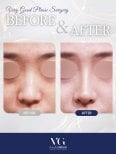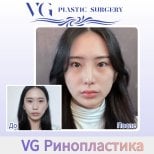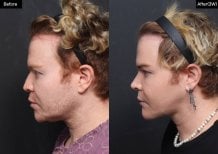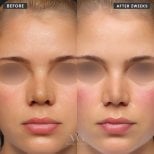
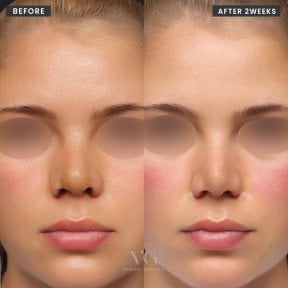
Tip rhinoplasty in Republic of Korea typically costs from AUD $3,300 to AUD $5,600. The final price depends on the chosen technique, surgeon seniority, and clinic location, with South Korea being a primary global hub for nasal refinement. In Australia, this procedure costs AUD $11,900 on average. Patients can save approximately 63% by travelling to Seoul. Standard packages often include doctor consultations and postoperative deswelling treatments.
Bookimed Expert Insight: Paying for premium packages in Seoul often secures access to vast clinical experience. JK Plastic Surgery Center has performed over 85,000 procedures, while specialists like Dr. Park Sun June have completed 5,000 cases. A standard tip rhinoplasty package starts around A$5,200 and includes a responsible one-on-one approach. This high volume across Seoul clinics contributes to the refined, natural outcomes sought by Australian patients.
| Republic of Korea | Thailand | Turkey | |
| Tip rhinoplasty | from AUD $3,300 | from AUD $2,200 | from AUD $2,900 |
Professor Park Young Kyu has performed over 1,100 successful plastic surgery procedures and serves on the steering committee of the Korean Rhinoplasty Research Society.
Professor Yong Woo Kim achieved the highest score on the residency exam set by the Korean Society of Plastic and Reconstructive Surgeons. He leads the surgical team at Returning Plastic Surgery in Seoul.
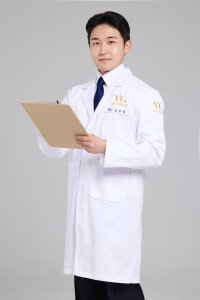
Dr Im Young Min was named one of South Korea's 100 Good Doctors for his work in rhinoplasty. As the lead surgeon at VG Plastic Surgery, he uses 3D-CT scanning to map nasal structures with pinpoint accuracy.
Dr Park Sangwook is a board-certified plastic surgeon and rhinoplasty specialist who has successfully performed over 900 cosmetic procedures.
Discussing graft materials, surgical approach, and structural stability is critical before tip rhinoplasty in South Korea. Patients must confirm if surgeons use autologous tissue like septal or ear cartilage. They should also verify credentials through boards like the American Society of Plastic Surgeons (ASPS). They should check that facilities have operating theatre CCTV for safety.
Bookimed Expert Insight: Major Seoul clinics treat 24,000+ patients annually. However, top-rated results often come from single-specialist practices like Saero Plastic Surgery or Returning Plastic Surgery. These smaller clinics allow one surgeon to oversee the entire process. This reduces the risk of factory-style care found in larger institutions.
Patient Consensus: Patients in Seoul recommend bringing reference photos. They also suggest requesting a CT scan on a USB for multiple consultations. Most suggest staying 14 days to manage initial swelling. They also recommend verifying that the surgeon they consulted is the one performing the procedure.
Surgeons in South Korea primarily use autologous tissues like rib, ear, and septal cartilage to reshape the nasal tip. These patient-derived materials are preferred over synthetic implants for the tip. They integrate better with natural tissue and reduce risks of inflammation or skin thinning.
Bookimed Expert Insight: While many clinics offer ear or septal cartilage, those specialising in complex cases often favour autologous rib cartilage. Dr Park Sun June at Intro Plastic Surgery has performed 5,000+ cases. This reflects the high-volume expertise Korean doctors have with these intricate grafting techniques.
Patient Consensus: Patients in South Korea often choose rib cartilage for its strength despite the extra cost. Most find the results look more natural. This happens when surgeons combine bridge implants with their own cartilage for the tip.
Avoiding a dolly nose in South Korea depends on choosing a surgeon specialising in natural aesthetics. Patients should also request a straight profile. While some clinics promote a dramatic upturned look, most board-certified specialists focus on balanced tip projection. They use autologous cartilage so the results match the patient's facial proportions.
Bookimed Expert Insight: Tip rhinoplasty in Seoul averages $2,300 to $3,900. This is roughly 63% less than the $8,300 Australian average. Data shows clinics like AB Plastic Surgery, which handles 24,000+ patients annually, employ specialised anaesthetists at twice the industry average. This helps to manage safety during these precise refinements.
Patient Consensus: Initial results often look exaggerated or artificial due to swelling. Patients suggest bringing photos of straight profiles. This helps avoid the dramatic upturn common in K-beauty trends.
South Korean surgeons correct a bulbous or wide nasal tip using bokko surgery. This technique narrows the nose by removing excess fatty tissue and subdermal fibrous layers. Specialists then reshape the alar cartilage and use strong grafts to provide long-term structural support.
Bookimed Expert Insight: South Korean clinics like AB Plastic Surgery and VG Plastic Surgery serve 1,000+ to 24,000+ patients annually. Experience with thick Asian skin leads surgeons to prefer rib cartilage over ear cartilage. This provides the necessary strength to prevent the tip from dropping over time.
Patient Consensus: Patients in Seoul report that swelling in thick skin can take over 12 months to subside. The results look natural when surgeons combine tip definition with 3D-planned bridge augmentation.
Final results from tip rhinoplasty in South Korea typically appear between 12 and 18 months. Major swelling resolves within 1 to 3 months. However, the nasal tip consists of dense cartilage and remains puffy or stiff for much longer than the bridge.
Bookimed Expert Insight: Surgeons at high-volume clinics often use 3D-CT scans to predict how tissues will settle. This data comes from clinics like AB Plastic Surgery, which serves 24,000+ patients annually. This technology helps manage expectations for the tip, which is the last area to soften.
Patient Consensus: Patients in Seoul recommend tracking progress weekly rather than daily because swelling fluctuates significantly. The consensus is to avoid judging the final shape until at least 6 months. This is because the tip remains rounder and firmer than expected during the first few months.
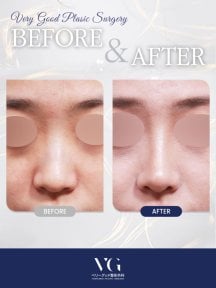
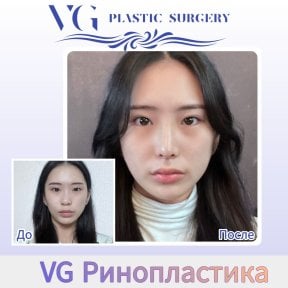
Tip rhinoplasty in South Korea is a precise surgical procedure. It focuses on reshaping the nasal tip cartilage to improve definition, projection, and symmetry. It addresses bulbous, drooping, or upturned tips while maintaining the nasal bridge. Key clinics like SAERO and VG Plastic Surgery specialise in these refinements.
Bookimed Expert Insight: While base procedures cost between $2,300 and $3,900, South Korean clinics often suggest using rib cartilage for significant projection. This can increase costs but provides the most stable structural support for short nose corrections compared to ear cartilage.
Patient Consensus: Patients find the intensive daily post-op care in Seoul, including deswelling lasers and professional cleaning, essential for recovery. Many suggest staying at least 2 weeks to ensure comfortable stitch removal and final specialist checks before flying home.
Non-surgical tip refinement is a popular alternative to surgical tip rhinoplasty in South Korea. Clinics in Seoul perform these procedures using dermal fillers. Common fillers like hyaluronic acid or Juvelook lift drooping tips and add definition. These treatments typically take 20 minutes with minimal recovery compared to surgical options.
Bookimed Expert Insight: While large hospitals serve thousands, smaller clinics often provide more personalised results. Examples include SAERO Plastic Surgery or Returning Plastic Surgery. These boutique centres specialise in subtle refinement. They avoid the generic Tinkerbell look common in high-volume factories. This is vital for patients wanting to maintain their natural ethnic features.
Patient Consensus: Patients in Seoul recommend bringing a translator for nuanced discussions. They also suggest staying in Gangnam near the clinics. Many found that fillers provide a temporary lift. However, surgical tip plasty using ear cartilage remains the best choice for permanent structural changes.