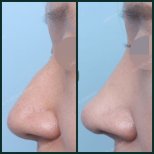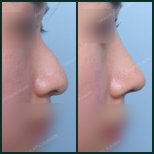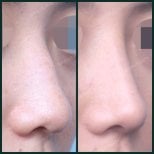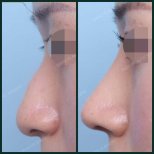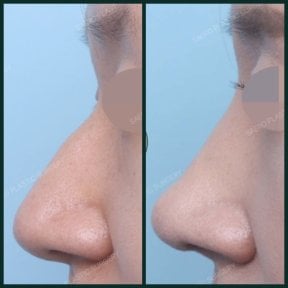
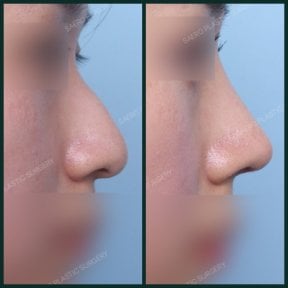
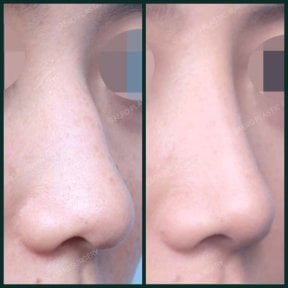
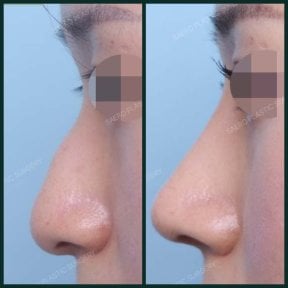
Nasal hump removal in the Republic of Korea typically costs from AUD $2,900. Prices depend on the surgical approach, the surgeon's seniority, and clinic locations in premium districts like Gangnam. In Australia, similar procedures cost around AUD $15,800 on average. Patients save around 82% by travelling to Seoul, with costs often including 3D-CT planning and postoperative deswelling treatments.
Bookimed Expert Insight: High-tier Seoul clinics provide exceptional value through advanced safety systems and high patient volumes. JK Plastic Surgery Center maintains a massive track record with over 85,000 procedures performed. Many facilities, like VG Plastic Surgery, hold KOIHA accreditation, which audits clinics for medical safety. Australians should look for clinics offering VAT tax refunds, allowing a 7–10% saving at the airport.
| Republic of Korea | Thailand | Turkey | |
| Nasal hump removal | from AUD $2,900 | from AUD $3,400 | from AUD $3,200 |
Dr. Park Young Kyu is a plastic surgeon at SAERO Plastic Surgery in Seoul. He graduated summa cum laude from Hallym University. Dr. Park earned the Top Medical Resident award from the Korean Society of Plastic Surgeons. He currently serves as an adjunct professor at Gangnam Sacred Heart Hospital.
Dr Park Sangwook is the Director of VG Plastic Surgery and a board-certified specialist who trained at Seoul St. Mary's Hospital. He focuses exclusively on facial aesthetics, bringing high-level precision to complex reconstructive and contouring procedures.
Dr Lee Hyuck Jae is a board-certified plastic surgeon and a dedicated member of the Rhinoplasty Research Association. He brings focused expertise in nasal reshaping to the team at Wonjin Plastic Surgery Clinic.
Dr. Jooyoung Park has trained over 300 physicians in filler and HIFU techniques. He is a board-certified dermatologist and the CEO of BIOFACE Clinic in Seoul. Dr. Park completed his residency at the prestigious Seoul National University Hospital. He serves as an advisor for L&C BIO on dermatologic injectable trials.
Nasal hump removal in South Korea carries risks. These include over-reduction leading to a scooped-out bridge and structural irregularities. Clinics like AB Plastic Surgery use 3-D CT diagnostics to map nasal anatomy. Still, patients may face breathing difficulties if internal cartilage support is compromised during reshaping.
Bookimed Expert Insight: While many clinics offer hyperbaric oxygen therapy for faster healing, volume matters most for safety. Leading Seoul clinics like AB Plastic Surgery handle 24,000+ patients annually. This high frequency allows surgeons to refine conservative techniques. These techniques preserve breathing function while smoothing the bridge.
Patient Consensus: South Korean patients report minimal pain. However, they note that swelling after bone work can last 6 months. Many suggest explicitly asking how much nostril tissue surgeons plan to cut. This helps avoid long-term breathing issues.
Lifting the nasal tip to hide a hump is safe but often not enough for lasting results in Korea. While tip plasty using autologous cartilage can disguise a mild dorsal hump, prominent humps usually need shaving bone and cartilage for a straight, natural profile.
Bookimed Expert Insight: While a tip lift alone costs around A$6,000–A$7,000, it rarely achieves the straight bridge most patients want. Bookimed data shows that 95% of successful hump corrections in Seoul involve both shaving the bone and bridge reconstruction. This combined approach ensures the hump does not look mismatched as the swelling subsides over several months.
Patient Consensus: Patients in Korea suggest choosing clinics that include hyperbaric oxygen therapy to manage bridge tightness and heavy congestion. Bringing a mini humidifier helps manage the mouth-breathing caused by post-operative swelling during the first few days.
Nasal hump removal in South Korea involves shaving excess bone and cartilage to smooth the profile. Bone cutting, known as osteotomy, is frequently required for moderate to large humps. This technique repositions nasal bones to close the gap created during removal. It ensures a slim, natural-looking bridge.
Bookimed Expert Insight: South Korean specialists often use 3D-CT scanning before surgery. This helps map the exact ratio of bone to cartilage in the hump. This data-driven approach lets surgeons like Dr Park Sangwook at VG Plastic Surgery decide if a simple shave is enough. An osteotomy might be vital for structural stability otherwise.
Patient Consensus: Patients in South Korea found that stitches come out in 7 days. However, the bridge feels heavy for months. Many recommend explicitly asking for an osteotomy. This prevents a widened bridge appearance after hump removal.
Open rhinoplasty in South Korea uses a small columellar incision. This gives full visibility during complex hump reductions. Closed rhinoplasty involves internal incisions only, suitable for minor adjustments. Leading Seoul surgeons at clinics like VG Plastic Surgery and Wonjin use 3D-CT scanning. This determines the most precise approach.
Bookimed Expert Insight: Many patients request closed rhinoplasty for faster healing. However, South Korea’s top-rated surgeons often recommend the open approach for humps. Data from Wonjin Plastic Surgery shows that specialists like Dr Kang Moon Seok, an ASPS member, use open techniques. This approach provides structural stability in 5,000+ international cases annually.
Patient Consensus: Patients in South Korea found closed techniques adequate for simple bone humps. These cases did not involve tip work. Many noted that columella scars from open surgery faded. They blended into natural creases within months.
Silicone implants are not strictly required after hump removal in South Korea. However, surgeons frequently recommend them to prevent a flat profile. High-volume Seoul clinics specialise in both silicone augmentation and non-implant techniques. They use 3D-CT scanning to decide if bridge height needs restoring after bone shaving.
Bookimed Expert Insight: Silicone is the standard for a sharp bridge. Still, Seoul specialists increasingly offer donor rib cartilage for patients wanting height without synthetic risks. Clinics like AB Plastic Surgery maintain a high specialist-to-patient ratio so that surgeons experienced in handling natural graft resorption perform these complex, non-implant reconstructions.
Patient Consensus: Patients in South Korea appreciate that 3D simulations show their potential profile with and without implants. Many choose silicone for its cost-effectiveness and stability. Others prefer the natural feel of donor rib despite the higher intensity of the procedure.
Initial recovery after nasal hump removal in South Korea takes 7 to 10 days. Patients typically have their nasal cast and external stitches removed on day 7. Most people return to social activities within 2 weeks. However, final refinement of the bridge takes 6 to 12 months.
Bookimed Expert Insight: Leading Seoul clinics like VG Plastic Surgery and AB Plastic Surgery use 3D-CT scanning before surgery. This allows surgeons to precisely measure bone and cartilage thickness. Such accuracy helps avoid over-shaving. This prevents the hump from appearing to return once scar tissue settles.
Patient Consensus: Patients should stock up on ice packs and easy-to-eat food in Seoul before the procedure. First-week congestion is common. However, walking helps reduce swelling, and the bridge looks significantly slimmer by the 4-month mark.
The best clinics for nasal hump removal in South Korea are in Seoul. They include specialist centres like SAERO Plastic Surgery, VG Plastic Surgery, and AB Plastic Surgery. These facilities specialise in osteotomy and cartilage grafting. They provide tailored results that balance the nasal bridge with facial features, while maintaining functional integrity.
Bookimed Expert Insight: While many clinics offer an A$1,200 starting price, these often cover only minor shaving. For a significant dorsal hump, look for packages with hyperbaric oxygen therapy, like those at SAERO. This treatment speeds up tissue healing. It also reduces the bruising commonly seen after osteotomy surgery.
Patient Consensus: Australians often choose Seoul clinics for the thorough consultations and natural results. Patients suggest bringing a humidifier for recovery. They also confirm that leading surgeons successfully adapt techniques for both Caucasian and Asian facial structures.