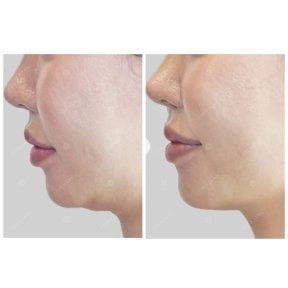
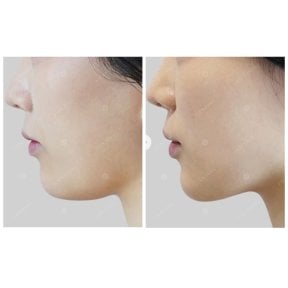
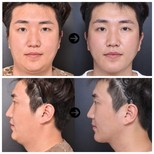
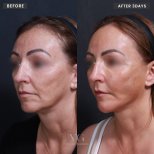
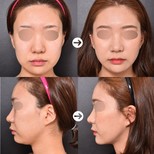
How Much Does Ultherapy Cost in Republic of Korea in AUD?
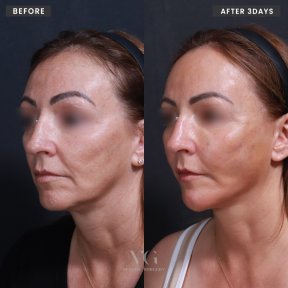
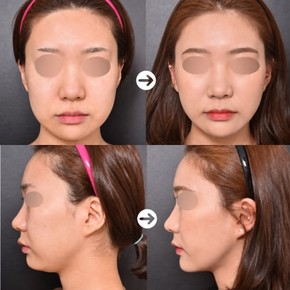
Ultherapy in the Republic of Korea typically costs from AUD $1,400 to AUD $2,600. Final prices depend on the shot count, device generation, and specific treatment areas like the jawline or full face. Patients often save about 55% compared to Australia, where the average cost is AUD $4,500. Packages frequently include dermatologist consultations and language assistance in major medical hubs like Gangnam and Cheongdam.
Ultherapy Prime: typically adds a 20–30% premium for the latest generation technology.
Shot count: treatments with 600 shots provide deeper lifting but cost more than 300-shot protocols.
Sedation fees: sleep anaesthesia for pain management usually adds a small fixed surcharge to the bill.
Bookimed Expert Insight: Choosing a clinic that bundles Ultherapy with other technologies often provides better value for Australian patients. For example, Forena Clinic offers packages around A$4,800 that combine Ultherapy Prime with ONDA and InMode for total facial rejuvenation. Specialist doctors like Dr. Yeom Jihye have performed over 14,000 procedures, ensuring high expertise levels. Larger clinics like BioFace Clinic serve 25,000 patients annually and include 5-star rated service. Australians can also find value at Oracle Clinic Cheongdam, which specialises in Thermage-Ultherapy combinations led by masters of the Solta Medical Academy.
Data verified by Bookimed as of October 2026, based on patient requests and official quotes from 62 clinics worldwide. Median costs are based on real invoices (2025–2026) and updated monthly. Actual prices may vary.
Best Ultherapy Clinics in Republic of Korea for Australians: 4 Verified Options and AUD Prices
Dr. Park Young Kyu is a plastic surgeon at SAERO Plastic Surgery in Seoul. He graduated summa cum laude from Hallym University. Dr. Park earned the Top Medical Resident award from the Korean Society of Plastic Surgeons. He currently serves as an adjunct professor at Gangnam Sacred Heart Hospital.
Specializes in complex facial contouring, deep plane facelifts, and revision rhinoplasty.
Member of the International Society of Aesthetic Plastic Surgery (ISAPS).
Active member of the American Society of Plastic Surgeons (ASPS).
Sits on the KSPRS steering committees for anti-aging and filler research.
15 years of experience • 1000+ treatments performed
Dr. Yong Woo Kim achieved the top score in the South Korean resident board exam. He is a board-certified plastic surgeon at Returning Plastic Surgery in Seoul. Dr. Kim has performed over 1,000 procedures. He specializes in deep plane facelifts, rhinoplasty, and eyelid correction.
Trained at the American Society for Reconstructive Microsurgery.
Received Best Paper awards from the Korean Society of Plastic and Reconstructive Surgeons.
Member of the Korean Society for Aesthetic Plastic Surgery.
Works at a KOIHA-accredited clinic approved by the American Society of Plastic Surgeons.
Dr. Cho Sung Hee is a physician at Lienjang Plastic Surgery & Dermatology Center in Seoul. She earned her medical degree from Seoul National University College of Medicine. She completed family medicine specialty training at Seoul National University Hospital, a leading academic medical center in Korea.
She is a member of the Korean Academy of Family Medicine, the Korean Academy of Obesity and Aesthetic Treatment, the Korean Society for the Study of Obesity, and the Korean Society for Dermatologic Laser Surgery.
Her clinical focus includes family medicine, aesthetic medicine, and obesity care. She provides evidence-based, safe, and personalized treatment. She uses advanced aesthetic procedures to improve health, skin quality, and confidence.
Video Stories from Bookimed Patients
Oksana
I have fulfilled my dream. Finally, I won't cry about my hair anymore.
Procedure: Hair transplant
Roman
Just 4 days in Turkey, and I'm already home with a new hair.
Procedure: Hair transplant
Dmitrii
Bookimed hooked me up with a really good clinic. I saved a ton of cash.
Procedure: Beard transplant
Anne
I feel like the happiest person in the world, thanks to Bookimed.
Procedure: Facelift
Diana
Thanks to Bookimed, I found hope and a clinic willing to help.
Procedure: Hair transplant
Jelena
I'm doing double takes in the mirror. The results are mind-blowing.
Procedure: Facelift
Danuta
I really like the result. Thanks to Bookimed for being there all the time.
Procedure: Botox injections
Mіla
Sure, I was nervous but that’s totally normal. The all-inclusive package was a game changer.
Procedure: Brazilian Butt Lift
Valentina
Traveling from Spain to Istanbul for a liposuction was a life-changing experience.
Procedure: Liposuction
Eleni
Huge thanks to Bookimed and my lovely Turkish host for all the support. I've already recommended your service to my girlfriends!
Procedure: Facelift
Reviews about Bookimed: Discover Patients' Insights
I couldn’t be happier with my decision to come here, and my flight back to Hawaii was smooth and stress-free
I had an amazing experience with Dr. Park and the entire team! From start to finish, everyone—especially Joanne—was incredibly accommodating and attentive, which made me feel safe and well cared for.
Dr. Park did an incredible job on my breast augmentation. Remarkably, after just one day of recovery, I was able to walk around Seoul, use public transport, and see all the sights I wanted to visit. Although it was slightly uncomfortable at times, I never experienced significant pain beyond the first few hours after waking from anesthesia. I truly believe this speaks to Dr. Park’s precision—and maybe a little to my own fast healing!
The clinic goes above and beyond for their patients. I received IV therapy, red light therapy, and hyperbaric oxygen therapy, all of which made me feel well supported throughout recovery. Dr. Park and the team checked in consistently, which is such a green flag—so different from many experiences in the U.S., where doctors often focus solely on the surgery itself.
I couldn’t be happier with my decision to come here, and my flight back to Hawaii was smooth and stress-free. I highly recommend Dr. Park for anyone seeking attentive, professional care and excellent results.
Anonymous • Botox injections
Poland
4 July 2026
Verified review.
That gave me a lot of confidence
I really appreciated the time my doctor took during the consultation for my forehead and frown lines. He was so thorough, explaining exactly where and why he would inject, and was very honest about what realistic results would look like after showing me photos of previous patients. That gave me a lot of confidence. Now in my early recovery, I'm feeling better than expected. It was a good process. The final price was exactly what I was quoted, with no additional expenses. My only note is that there was little contact from the clinic after my appointment, but overall the service was solid.
I’ve love how medical coordinator took care of everything !
Trudy Gorman
United Kingdom
5 June 2026
Verified review.
If a friend asked me where to go for deep plane facelift 'd tell them about this clinic without hesitation
If a friend asked me where to go for deep plane facelift 'd tell them about this clinic without hesitation. The process from start to finish was handled with such professionalism. I am still in the early stages of healing, so I am following all the aftercare instructions carefully. The surgeon was thorough, and the entire staff made me feel comfortable and well-cared-for throughout my visit. The facility was also very clean and modern. I am thankful for the support I received from the whole team.
Plenty of communication.
One to one english speaking team member.
Very attentive staff members who were dealing with me.
Surgeon very professional and easy to understand.
My bookimed contact Olha was great
Directions to clinic for those who do not use google maps. Taxi do not pick up due to short distance.
Anonymous • Facelift
United States of America
7 Oct 2026
Verified review.
So far, my recovery is going better than expected
My main concern was the surgeon's skill, but it was unfounded. The location is ideally placed in Seoul, with friendly, helpful, and kind staff. My surgeon was patient and experienced, performing a deep plane facelift on my full face and neck. So far, my recovery is going better than expected. I valued the post-op healing services like red light therapy and the optional HBOT treatments. The clinic provided a clear aftercare guide, stayed in touch, and has been consistently easy to reach.
Location is ideally placed in seoul.
Friendly helpful kind staff.
Patient gentle knowledge experienced surgeon.
Red light laser therapy postop healing service.
HBOT post op healing treatment option.
Ignacio Jiménez • Nonsurgical Facelift
Republic of Korea
21 Oct 2024
Verified review.
The process and guidance in finding the most appropriate treatment option was perfectly managed by Jimena
The process and guidance in finding the most appropriate treatment option was perfectly managed by Jimena.
A close and diligent professional who empathises with the needs we conveyed to her.
Anonymous • Alopecia
Republic of Korea
20 Oct 2024
Verified review.
Everything was great
Thank you so much for the help I received! Everything was great.
Responsiveness
I liked everything about it.
About Bookimed service
The staff and coordinator are wonderful! Responsive! Very helpful!
Karin • Acne Laser Treatment (per session)
Republic of Korea
17 Feb 2020
Verified review.
Provides a translation service which is really nice. However,
A certified medical writer with 10+ years of experience, developed Bookimed’s trusted content, backed by a Master’s in Philology and medical expert interviews worldwide.
General practitioner. Winner of 4 scientific awards. Served in Western Asia. Former Team Leader of a medical team supporting Arabic-speaking patients. Now responsible for data processing and medical content accuracy.
This page may feature information relating to various medical conditions, treatments, and healthcare services available in different countries. Please be advised that the content is provided for informational purposes only and should not be construed as medical advice or guidance. Please consult with your doctor or a qualified medical professional before starting or changing medical treatment.
FAQ about Ultherapy in Republic of Korea
These FAQs come from real patients seeking medical assistance through Bookimed. Answers are given by experienced medical coordinators and trusted clinic representatives.
Is the Ultherapy offered in South Korea the same as in the US?
Ultherapy in South Korea utilises the same FDA-cleared hardware made by Merz Aesthetics as in the US. However, many Seoul clinics have already upgraded to Ultherapy Prime. This newer model offers real-time ultrasound imaging and more consistent energy delivery. It is still rare in most American practices.
Device technology: South Korean clinics frequently use the latest Ultherapy Prime for better results.
Treatment protocols: Surgeons often stack Ultherapy with Thermage FLX for deeper skin tightening.
Pain management: Sleep sedation is commonly available to allow for higher, more effective energy.
Shot mapping: Procedures are often sold by shot counts, typically between 300 to 600.
Bookimed Expert Insight: Data shows a clear trend. Top Seoul clinics, like Forena Clinic, bundle Ultherapy Prime with InMode or ONDA technology. These combinations provide a multi-layer lift that standard US standalone sessions cannot match. Dr Yeom Jihye at Forena Clinic has performed over 14,000+ procedures. This highlights the massive experience gap found in high-volume Korean centres.
Patient Consensus: The genuine US device in South Korea provides noticeable jawline definition after two weeks. Sessions feel like deep warmth rather than sharp zaps when using the updated Prime model.
How can I ensure the Ultherapy treatment in South Korea is authentic?
In South Korea, authentic Ultherapy is ensured by checking two things. Verify the clinic's Merz Aesthetics partnership and use the Touch Prime NFC system. Patients should demand the clinic scan the transducer box and machine in their presence. These steps guarantee genuine equipment and unexpired tips for safe, effective lifting.
Device verification: Scan the Touch Prime NFC tag on the machine with a smartphone.
Transducer tracking: Verify the QR code on the sealed tip box before it is opened.
Real-time imaging: Ensure DeepSEE technology is active to see skin layers during the procedure.
Certificates provided: Request the official Merz Aesthetics Certificate of Authenticity and the empty box.
Shot count: Confirm the promised number of shots is displayed on the device screen.
Bookimed Expert Insight: Many clinics offer a standard treatment. However, experts like Dr. Yeom Jihye at Forena Clinic perform 14,000+ procedures. High-volume specialists often use the Ultherapy Prime system. This newer model features automated verification tools. These are much harder to bypass than older paper-based stickers.
Patient Consensus: Patients in Seoul recommend staying awake or using an interpreter. Doing so ensures the clinic opens sealed boxes in theatre. Reliable clinics provide the serial numbers and certificates without being asked.
How long do results from Ultherapy in South Korea last?
Ultherapy results in South Korea typically last between 12 and 18 months. Initial tightening occurs immediately. However, the peak lifting effect develops gradually as new collagen forms. Most patients see maximum results 3 to 6 months after their session. This is typical for clinics in Seoul.
Peak timeline: Full lifting and skin tightening typically mature 3 to 6 months post-treatment.
Typical duration: Most patients maintain their improved appearance for 12 to 18 months.
Maintenance schedule: Specialists generally recommend a repeat session every 12 to 18 months.
Shot count: Full-face results usually require 600 to 800 shots for optimal longevity.
Bookimed Expert Insight: South Korean clinics often combine Ultherapy with Thermage FLX for superior longevity. Data shows these combination packages target both deep SMAS layers and surface skin. For instance, those at Oracle Clinic Cheongdam do this. This dual-layer approach often extends the visible lifting effect beyond the standard 12 months.
Patient Consensus: Patients will likely leave Seoul before seeing the full effect. This is because collagen rebuilding takes months. Results last much longer than cheaper HIFU alternatives. This makes the annual maintenance trip worthwhile for most.
Is Ultherapy in South Korea painful?
Ultherapy in South Korea is a manageable procedure with low-to-moderate discomfort when performed using modern protocols. Most patients report pain levels between 2/10 and 4/10. Ultherapy Prime technology and strong topical numbing creams make deep tissue heating tolerable. Most individuals find the sensation bearable.
Technological impact: Newer Ultherapy Prime systems deliver smoother energy, significantly reducing sharp stinging sensations.
Numbing protocols: Clinics apply medical-grade lidocaine for 30–45 minutes to dull surface-level sensitivity effectively.
Sensitive zones: The jawline and chin often feel sharper electric jolts due to less fat.
Sedation options: Leading centres like AB Plastic Surgery offer sedation for patients with lower pain tolerance.
Recovery sensations: Post-treatment tenderness or facial swelling typically fades within 3 to 7 days.
Bookimed Expert Insight: Data shows that South Korean specialists have performed 14,000+ procedures. Dr Yeom Jihye at Forena Clinic is one such specialist. This high volume allows doctors to expertly calibrate energy levels across different facial zones. Patients often find treatment more comfortable here. Experienced surgeons adjust settings in real time based on patient feedback.
Patient Consensus: South Korean clinics provide deep tissue heating. It feels like tiny rubber bands snapping or quick bursts of warmth. Most describe the experience as surprisingly manageable. However, jawline areas can feel like a deep ache that reaches the bone. This sensation lasts a few seconds.
What is the downtime after Ultherapy in South Korea?
Ultherapy in South Korea involves virtually no downtime. Most patients resume normal activities straight away. Symptoms like mild redness or flushing usually fade within 1–2 hours. Minor swelling and tenderness along the jawline typically settle within 1–3 days.
Immediate recovery: Resume a normal routine or catch a flight on the same day.
Managing symptoms: Use numbing cream before the procedure to ease discomfort along the jawline.
Social recovery: Apply makeup immediately as the treatment leaves no wounds or scabs.
Aftercare protocol: Avoid saunas, hot baths, and alcohol for 3–7 days after treatment.
Bookimed Expert Insight: While Ultherapy is famed for zero downtime, choosing a clinic with the Ultherapy Prime system makes a difference. Doctors like Dr. Yeom Jihye at Forena Clinic use this newer technology because it is faster and causes less discomfort. This is especially helpful for international patients who want to minimise tenderness before a long-haul flight back to Australia.
Patient Consensus: Your face may feel mildly tender to touch for about a week. Even so, this will not stop you from exploring South Korea. Results take 2–3 months to appear, so take photos now to track the gradual lifting later on.
What is Ultherapy Prime for Ultherapy in South Korea?
Ultherapy Prime is the latest, upgraded version of the original FDA-cleared non-surgical lifting treatment. It is available in South Korea. It uses high-intensity focused ultrasound (HIFU) to target the SMAS layer. This is the same layer addressed in surgical facelifts. The result is effective skin tightening.
Imaging: Features DeepSEE technology with high-definition ultrasound imaging visible up to 8mm deep.
Faster delivery: Energy is delivered 20% faster than standard devices for shorter sessions.
Targeted shots: Typical full-face treatments involve 600 shots focusing on jawlines and sagging.
Sustained results: Collagen remodelling peaks at 3–6 months with results lasting up to 12 months.
Bookimed Expert Insight: Ultherapy Prime is faster. However, the real advantage in Seoul is the trend of combination therapy. Clinics like Oracle Clinic Cheongdam often bundle Prime with Thermage FLX for A$3,000 to A$3,400. This approach treats both the deep SMAS layer and superficial skin texture in one visit.
Patient Consensus: Patients in South Korea notice a more defined jawline within two weeks. Many find the experience smoother with high-quality numbing cream. They also appreciate seeing their tissue layers on the real-time imaging screen.
What is the '300 or 600 shot' rule for Ultherapy in South Korea?
The 300 or 600 shot rule in South Korea determines the density of ultrasound energy delivered to the skin. 300 shots typically target specific areas like the jawline or double chin. 600 shots provide a comprehensive full-face and upper-neck lift.
Standard 600 shots: Recommended for a complete full-face and neck lift for most patients.
Targeted 300 shots: Used for maintenance, localised areas, or younger patients with minor sagging.
Age-based calculation: Practitioners often suggest shot counts based on age plus 100 to 300 units.
Combination protocols: Ultherapy is frequently paired with Thermage FLX for simultaneous lifting and tightening.
Bookimed Expert Insight: Korea's Ultherapy Prime systems allow for more precise mapping than older models found elsewhere. Leading specialists like Dr Yeom Jihye at Forena Clinic have performed 14,000+ procedures. This highlights the skill depth available. Choosing a package with 600 shots means the SMAS layer is reached consistently across all facial zones.
Patient Consensus: Patients find 600 shots essential for visible lifting if they are over 30. Many recommend splitting treatments into smaller sessions if they have thin or sensitive skin in Korea.