25 years of experience
30000 treatments
Labiaplasty in South Korea
Labiaplasty in the Republic of Korea typically costs from AUD $5,500. Final pricing depends on the chosen surgical technique, the clinic tier, and whether patients combine it with other procedures. In Australia, this surgery costs about AUD $9,000 on average. Patients save approximately 40% by travelling to Seoul, where quotes usually include anaesthetic, facility fees, and post-operative checks.
Bookimed Expert Insight: Australian patients often find better value in specialised women’s clinics in Seoul. For instance, Trinity Women's Clinic offers premium artisan designs for approximately A$3,300. This includes specialist consultations and language assistance. Large facilities like Seoul Miz Hospital, which treats 200,000 patients annually, provide high-volume expertise. This level of specialisation often ensures more refined aesthetic outcomes than general plastic surgery centres.
| Republic of Korea | Thailand | Turkey | |
| Labiaplasty | from AUD $5,500 | from AUD $1,700 | from AUD $2,200 |
| Scarless labiaplasty | ≈ AUD $3,200 | ≈ AUD $2,200 | from AUD $2,900 |
| Non-surgical labiaplasty | ≈ AUD $1,000 | ≈ AUD $1,600 | from AUD $1,300 |
| Labia Reduction | ≈ AUD $2,600 | from AUD $2,000 | from AUD $2,200 |
| Labia Majora Augmentation With Hyaluronic Acid Filler | ≈ AUD $860 | from AUD $7,900 | from AUD $1,200 |
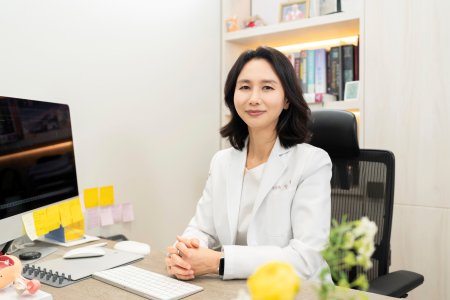
Dr. Yeoun E Park is the hospital director and Chief Medical Officer at Seoul Miz Hospital. She specializes in laparoscopic surgery for uterine fibroids and ovarian tumors. Dr. Park also manages the incontinence and women's cosmetic surgery clinics. She holds adjunct professor roles at Korea University and Hallym University medical colleges.
Dr. Kim Kyu Hee is a board-certified plastic surgeon at Wonjin Plastic Surgery Clinic. She specializes in aesthetic procedures for the face, breasts, and body. Dr. Kim practiced as a surgeon and administrator at Soonchunhyang University Hospital. She treats international patients from the US, Canada, and the UK.
When considering Labiaplasty, it’s important to understand the different techniques and which is best suited for you. Here’s a concise comparison of popular options:
A surgical procedure designed to reshape and reduce the size of the labia minora or majora.
A minimally invasive procedure to reshape the labia without visible scarring.
Non-surgical labiaplasty is a procedure to reshape or reduce the labia using non-invasive methods.
Permanent loss of sensation after labiaplasty in South Korea is highly unlikely. Most patients experience temporary numbness for 3 to 6 months as nerves regenerate. Specialist clinics in Seoul use conservative wedge techniques. They also use artisan designs like Return 14. These methods preserve nerve-rich tissue and natural sensitivity.
Bookimed Expert Insight: High-volume Seoul clinics like Seoul Miz Hospital handle 200,000+ patients annually. This gives their specialists immense experience in delicate tissue handling. Clinics that offer specialised Return 14 artisan designs often provide a more tailored result than standard trimming. This helps safeguard the complex nerve networks in the pelvic region.
Patient Consensus: Expect temporary numbness or tingling during the first few months in South Korea. Patients find that choosing conservative reduction over aggressive excision preserves full feeling and prevents long-term sensitivity issues.
South Korea attracts patients for labiaplasty. It combines laser surgical techniques with significant cost savings. Specialists in Seoul use precise laser technology to minimise scarring and speed up healing. Patients benefit from high-volume clinics. These offer functional relief and aesthetic improvements at competitive prices.
Bookimed Expert Insight: Gangnam clinics are famous. However, looking into specialised women's hospitals like Seoul Miz provides a different advantage. These larger facilities often have 180+ beds and dedicated international patient centres. This infrastructure provides 24/7 medical support that smaller boutique clinics might not match.
Patient Consensus: Patients in South Korea value using lasers instead of stitches for faster recovery. They recommend staying for 2–3 weeks for proper healing before flying home.
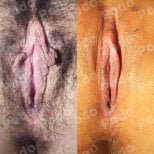
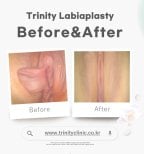
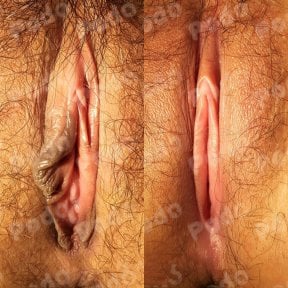
Scarless labiaplasty in South Korea refers to laser-assisted or minimally invasive techniques. These techniques reduce labial tissue with no visible scarring. Specialists in Seoul use high-precision lasers and the wedge technique. This preserves natural edges and conceals incision lines within the folds.
Bookimed Expert Insight: While many centres advertise scarless results, the most reliable outcomes come from the wedge technique. Dr Yang Ki Yeol at Trinity Women's Clinic is a recognised pioneer in this field. Choosing a surgeon with 1,000+ procedures means the design follows natural anatomical lines.
Patient Consensus: Patients in South Korea found initial pain levels low for these minimally invasive procedures. Most note that following the 8-week recovery protocol is essential even when incisions look healed.
The trim technique removes the outer pigment by resecting the labia edge. The wedge technique excises a V-shaped piece of tissue from the centre to preserve natural contours. The choice depends on whether patients prefer removing darkened edges or keeping the original texture and sensation without long linear scarring.
Bookimed Expert Insight: Clinics like Seoul Miz Hospital serve over 200,000 patients each year. This suggests high-volume Korean centres have immense technical experience with complex wedge closures. The wedge technique is skill-dependent, so choosing a centre with over 5,000 specialised surgeries helps achieve precise suturing. This prevents wound separation.
Patient Consensus: Patients in Korea highlight that the wedge preserves sensation. Still, the trim technique is more effective for correcting dark pigmentation. Most suggest checking the surgeon's revision policy for wedge splitting before booking.
Most patients return to light daily activities and desk work in 3 to 7 days. This is after labiaplasty in South Korea. Gentle walking is encouraged immediately to aid healing. Strenuous exercise, heavy lifting, and sexual activity must be avoided for at least 6 weeks. This ensures proper recovery.
Bookimed Expert Insight: Clinics like Seoul Miz Hospital serve 200,000+ patients annually. This massive volume allows specialists to refine minimally invasive techniques that reduce downtime. Patients often choose “Scarless” or “Return 14” protocols. These focus on rapid aesthetic recovery within two weeks.
Patient Consensus: Patients in South Korea suggest staying 14 days. This helps monitor swelling before the long flight home. They recommend using Vaseline to prevent stitches from sticking. They also suggest wearing loose clothing for comfort.
After labiaplasty in South Korea, patients should wait at least 6 weeks before having sexual intercourse. They should also avoid using tampons during this time. This period allows delicate incisions to heal and prevents dissolvable stitches from tearing. Surgeons at clinics like Trinity Women’s Clinic or Seoul Miz Hospital provide specific clearance. They do this during post-operative check-ups.
Bookimed Expert Insight: Clinics like Seoul Miz Hospital serve 200,000 patients annually. They have high-volume experience with feminine surgeries. Many Seoul surgeons now use the Return 14 artisan technique. This method focuses on minimal tissue trauma. It often leads to smoother healing compared to traditional wedge resections.
Patient Consensus: Using sanitary pads or period pants instead of tampons prevents discomfort. This is especially helpful during the first cycle. Some patients in the Republic of Korea even use contraceptive pills to delay their periods. They do this during the initial recovery weeks.
Labiaplasty in South Korea takes 30 to 40 minutes under local anaesthesia. This outpatient procedure is performed by specialists such as Dr Yang Ki Yeol at Trinity Women's Clinic. Patients generally feel no pain during surgery. They experience manageable discomfort during the first 48 hours of recovery.
Bookimed Expert Insight: While simple labiaplasty is incredibly fast, combining it with other functional procedures increases theatre time to 3–4 hours. High-volume centres like Seoul Miz Hospital handle 200,000+ patients annually. They often use advanced technologies like the Da Vinci system for complex cases. For Australian patients, staying in Seoul for 7–10 days means the surgical team can monitor the initial healing phase before the flight home.
Patient Consensus: Patients report manageable stinging during the first two days after surgery in Korea. Daily life feels normal after 72 hours, though final aesthetic results appear gradually over 6 months.