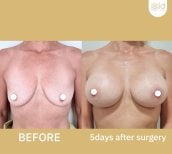
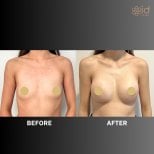
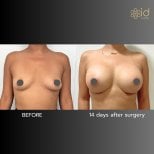
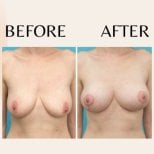
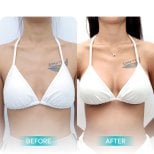
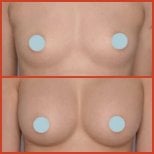
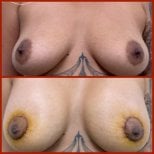
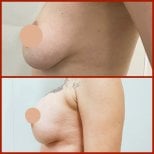
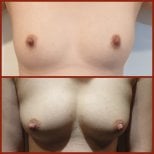
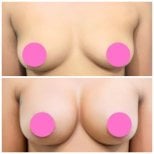
How Much Does Breast augmentation Cost in Thailand in AUD?
Breast augmentation in Thailand typically costs from AUD $4,146 / ฿A140,962 to AUD $8,149 / ฿A277,063. Prices depend on implant brands like Motiva or Mentor, surgical technique, and the hospital's location in hubs like Bangkok. In Australia, this procedure costs AUD $13,724 / ฿A466,633 on average, meaning patients save approximately 55% by choosing Thailand. Packages usually include surgeon fees, anaesthesia, pre-operative tests, and airport transfers.
Breast augmentation with fat transfer: AUD $3,288 / ฿A111,797 to AUD $7,148 / ฿A243,038 for a natural result using your own tissue.
Breast augmentation with silicone implants: AUD $5,004 / ฿A170,126 to AUD $9,293 / ฿A315,949 using high-quality gel implants.
Breast augmentation with tear drop implants: AUD $4,718 / ฿A160,405 to AUD $8,721 / ฿A296,506 for an anatomical shape.
Premium implant surcharges: Motiva Ergonomix or Mentor CPG implants typically add a 15–20% premium.
Combined procedures: Adding a breast lift often increases the base surgical price by 30–50%.
Bookimed Expert Insight: Thai hospitals offer exceptional value by bundling high-end implants with extended recovery care. Packages at ID Clinic Bangkok start around A$5,200 and include Motiva implants plus a six-night hotel stay. For complex cases, Wansiri Hospital provides 3D modelling for more predictable outcomes. Doctors like Dr Phatcharasak Kraisornphongsakul have performed over 20,000 procedures, ensuring vast experience that attracts many Australian patients.
Data verified by Bookimed as of July 2026, based on patient requests and official quotes from 377 clinics worldwide. Median costs are based on real invoices (2025–2026) and updated monthly. Actual prices may vary.
Best Breast augmentation Clinics in Thailand for Australians: 15 Verified Options and AUD Prices
This cosmetic surgery enhances breast size and shape using saline-filled implants, typically involving a short recovery period and offering customizable results.
Enhances breast size and shape by placing silicone implants under the breast tissue or chest muscle, offering a natural feel and appearance with a recovery period involving temporary swelling and soreness.
How to find best offer with Bookimed?
Discover options on the website: deals, clinics, and doctors.
Select your favourites.
Share photos or describe your issue.
Send a request.
Receive free offers for your needs with prices and details.
Compare and finalise your choice.
Book your clinic visit.
Pay at the clinic. Bookimed fees are $0 for you.
From start to finish, the Bookimed coordinator keeps you safe and comfortable during your medical journey.
100% free, non-binding assessment of your case after photos download.
Instant FREE personalised offers to make the right choice.
Expert guidance in choosing the perfect Plastic Surgery doctor and clinic.
Special packages and exclusive prices for our patients.
24/7 Bookimed guidance at no cost, guaranteed.
Hassle-free translation of your medical documents for clinics.
Multilingual staff — no language barrier with Bookimed coordinator.
Bookimed ensures transparent and secure payments. Patients pay at the clinic with no additional fees.
28 years of experience • 15000+ treatments performed
Dr Tanongsak Panyawirunroj is a specialist plastic surgeon who trained at the prestigious Siriraj Hospital before completing advanced surgical fellowships across North America and Asia.
Holds a diploma in Plastic and Reconstructive Surgery from Mahidol University
Member of the International Society of Aesthetic Plastic Surgery (ISAPS)
Completed specialized cosmetic surgery training at the Landing Surgery Center in North America
Member of the American Society of Plastic Surgeons (ASPS)
Focuses on personalized treatment plans for natural-looking breast enhancement
Saran Wannachamras is a prominent plastic surgeon at Wansiri Hospital who completed specialist training at the Eastern Virginia Medical School in the United States.
Holds a Graduate Diploma in Clinical Science from Chulalongkorn University
Member of the Society of Plastic and Aesthetic Surgeons of Thailand
Fellow of the International College of Surgeons in plastic surgery
Completed over 900 surgical treatments with a high patient satisfaction rating
Recognised by the Oriental Society of Aesthetic Plastic Surgery
Video Stories from Bookimed Patients
Vika
In a few hours, I went from being self-conscious to loving my new look.
Procedure: Breast augmentation
Alona
A beautiful, natural shape and symmetry. Exactly what I wanted!
Procedure: Breast augmentation
Alina
I went from an A to a B cup, and I’m thrilled with the results!
Procedure: Breast augmentation
Anna
Picture this: support, self-improvement, and savings all rolled into one unforgettable trip.
Procedure: Breast lift
Tetiana
Now that I'm back home, I'm so happy to have realized my dream and reflect on the amazing experience I had along the way!
Procedure: Breast augmentation
Beckie
They did a full health check before the surgery, and the nurses were so kind — I had no pain, no discomfort.
Procedure: Mommy makeover
Alanna
Everything went smoothly — from meeting the driver to post-op care.
Procedure: Breast Augmentation with Tear Drop Implants
Reviews about Bookimed: Discover Patients' Insights
The clinic staff were competent, and the surgeon was clear in our consultations
Waking up, I felt groggy but managed. The clinic staff were competent, and the surgeon was clear in our consultations. The incision was placed under the breast, which is what I wanted. I am still in the early recovery phase, and it has its challenges. My pain has lessened to a mild discomfort, but sleeping through the night is difficult, and my nipples are uncomfortably hypersensitive. Overall, the medical care was solid, though the recovery process itself is demanding. It’s a serious undertaking.
Anonymous • Full Body Lift
Thailand
25 July 2026
Verified review.
Recovery and scarring were my main concerns going in, and my surgeon handled that really well — he was upfront about how long healing would take and took time to explain and mark where the scars would sit before we even started. The whole body lift happened in one surgery, so it's still too soon to know how the final results will look. The clinic experience itself was a bit mixed — support after the surgery wasn't great, and I barely heard from anyone after I was discharged. On the bright side, there were no hidden or extra costs. My advice to anyone considering this: ask the practical questions upfront — whether the clinic provides meals or you'll need to order food yourself, and whether your surgery and recovery stay happen at the same facility or you'll be moved between a clinic and a hospital.
The doctors work was excellent
The clinic wasn't great for overnight stays and although some of the nursing staff were good at their tasks, it could take a long time for a need to be seen to though.
I think the team there need to communicate better within themselves as to a client's needs that may need to be met by a specific team member, ie: if you inform reception that you require assistance that can only be given by a nursing attendant, you could wait for hours for that to be communicated and carried out.
Iram Ahmed • Breast augmentation
Australia
19 Apr 2026
Verified review.
The surgeon and staff were very capable and provided solid care from start to finish
The main thing I worried about was the recovery, and it is definitely a process. At 15 days post-op, sleeping on my back is hard, and the pain is still moderate, though it's manageable. It's not easy. I’m glad that my nipple sensitivity feels normal, which was a specific concern since my surgeon used an incision around the nipple. The surgeon and staff were very capable and provided solid care from start to finish. My best advice for anyone else is what got me through the tougher moments: have patience and trust the procedure.
Very warm gesture I have been experienced from doctor and staff very cooperative and responsible.
Nothing all things were up to the mark
Valeriia Markova • Breast augmentation
Canada
17 Mar 2025
Verified review.
100% recommend this clinic
On 19.02.2025 I had breast augmentation surgery. Beforehand, I received a detailed consultation from professionals Dr Anychit Kitsombud, Dr Elena Goldobenko and nurse Maricor. The doctor helped with the choice of size and shape of implants, told me in detail about the operation, consequences, recovery process, gave clear recommendations. The surgery was easy, the medical staff was always in touch, they helped, cared. Dr Elena is always in touch, controls the recovery process, gives recommendations. Definitely, the choice of this clinic was the right decision for this operation. I am very happy with the result. 100% recommend this clinic. Professionalism, safety, care - B Care!
Anonymous • Breast augmentation
Ukraine
6 Sept 2023
Verified review.
I had my surgery at B.care on Bukimed's recommendation.
Before the surgery, I asked the doctor 3 times what complications there could be, but the interpreter and (assistant surgeon) "did not understand the question" said that there could be problems "ONLY if I do not do massage after surgery.
After my breast augmentation, my pocket tore and my implant went down.
The doctor told me to wear a rubber band from the post-operative underwear - on top, which provoked the breast drooping even more. Then I was taken to the breast correction, which was done under local anesthesia, just injected the breast with Ledocoin, cut the stitches, tightened and sewed back. It was very painful and I experienced a huge amount of stress that I still remember to this day. This kind of surgery should be under general anesthesia.
After the correction, I have again lowered one breast, of course, not so much, but still, very ugly looks. Also initially the doctor placed the implants very low, because of this there is little volume on top, it looks like not round but drop-shaped implant (which does not fit my body type).
All postoperative rules and recommendations and followed, wore underwear and massages.
The doctor said that this is because I "lay on the chest" shifting the responsibility on me. But, to surf I was allowed in 2.5 months, and there you need to lie on the chest. I learned about the fact that you can not lie on the chest for a year, when I had a torn pocket.
I do not recommend the clinic and the surgeon. Very disappointed.
Zhenni Jiang • Breast augmentation
Singapore
22 Oct 2024
Verified review.
For real I have 0 complaint at all! Highly recommend!
Travelled all the way from Singapore to Thailand because of the great reviews I read online. Here's what I experienced: There was no pain at all during the surgery. By day 6, I was moving around just fine (I did my surgery on a Saturday and flew back to Singapore the following Friday with no issues, even while carrying my luggage). By day 9, all the pain was gone, and I could carry my heavy school bag to school the whole day without any problem. I was honestly quite surprised at how fast I recovered, especially after reading that some people take one to three months to fully recover. That's one of the main reasons I recommend this clinic. The breast implants turned out really well. For real I have 0 complaint at all! Highly recommend!
Today is the 9th day from the day of my surgery and I’m alrdy recovered from the painfulness.
No complain at all, all good
About Bookimed service
NA
Anonymous • Breast augmentation
Hong Kong
22 Jan 2026
Verified review.
I am delighted that the scars are well hidden and now they are fading away
Dr has a lot of experience in breast implants, he removed my old implants together with capsulatomy and replaced them with new implants with very little scarring. I had waited two weeks to give a proper analysis of his work,, and am delighted that the scars are well hidden and now they are fading away.
Dr has many years of experience in doing implants and he had to remove my old implants and a capsulectomy procedure and putting in new implants with little scarring.
Nothing
About Bookimed service
They have been quite consistent with follow up q and a, and have been quite prompt with replies too.
Amber Zechmann • Breast augmentation
United States of America
14 Dec 2024
Verified review.
Everything was amazing
Everything was exactly what they said Everything was amazing
A certified medical writer with 10+ years of experience, developed Bookimed’s trusted content, backed by a Master’s in Philology and medical expert interviews worldwide.
General practitioner. Winner of 4 scientific awards. Served in Western Asia. Former Team Leader of a medical team supporting Arabic-speaking patients. Now responsible for data processing and medical content accuracy.
This page may feature information relating to various medical conditions, treatments, and healthcare services available in different countries. Please be advised that the content is provided for informational purposes only and should not be construed as medical advice or guidance. Please consult with your doctor or a qualified medical professional before starting or changing medical treatment.
Our Breast augmentation Techniques: What Suits You Best?
When considering Breast augmentation, it’s important to understand the different techniques and which is best suited for you. Here’s a concise comparison of popular options:
Breast Augmentation with Fat Transfer
This breast enhancement method involves transferring fat from other body areas to the breasts to increase volume.
Pros: Uses your body's fat, reducing the risk of rejection. Offers more natural results compared to pectoral implants. Avoids foreign materials like silicone or saline implants.
Cons: Typically achieves a smaller increase in size compared to tear drop implants. Requires enough donor fat from other body areas.
Effectiveness: Success rate of 60-80% for fat survival in the transferred area.
Duration: 3-5 hours
Recovery: 2-4 weeks
Best for: Women seeking modest breast enlargement and body contouring. Suitable when natural results are desired.
Prices: Cost of Breast Augmentation with Fat Transfer in Thailand from AUD $3,260
FAQ about Breast augmentation in Thailand
These FAQs come from real patients seeking medical assistance through Bookimed. Answers are given by experienced medical coordinators and trusted clinic representatives.
How do I choose the correct implant shape and incision type for my breast augmentation in Thailand?
Choosing the right breast implant shape and incision type in Thailand involves matching body proportions with surgical techniques during a 3D simulation. Certified plastic surgeons at JCI-accredited facilities like Asia Cosmetic Hospital use predictive imaging to balance natural chest width with desired volume.
Implant shapes: Motiva Ergonomix implants stand vertically like teardrops but flatten when lying down.
Anatomic profiles: Mentor CPG gel implants provide a natural slope for patients with minimal tissue.
Incision paths: Inframammary cuts in the breast fold offer surgeons maximum control and precision.
Discrete options: Transaxillary incisions in the armpit leave no visible scars on the breast surface.
Bookimed Expert Insight: Thai clinics like ID Clinic Bangkok and Wansiri Hospital have surgeons who have performed 20,000+ procedures. Dr Phatcharasak Kraisornphongsakul is one such expert. This high volume means they have matched implants to thousands of different frames. Clinics often include 11-day recovery packages to monitor healing.
Patient Consensus: Patients in Thailand recommend choosing shapes based on chest width rather than trends. They found 3D modelling and detailed consultations helped them feel confident in their final result.
Is getting breast augmentation surgery in Thailand safe for Australians?
Breast augmentation in Thailand is safe when performed by surgeons with extensive international training. Australians should choose JCI-accredited facilities like Asia Cosmetic Hospital or Yanhee International Hospital. Success depends on selecting providers using TGA-approved implants such as Mentor or Motiva. Patients must allow enough in-country recovery time to prevent flight-related complications.
Surgeon credentials: Top specialists like Dr Rushapol Sdawat hold memberships in the American Society of Plastic Surgeons.
Facility standards: Major centres like Yanhee and Asia Cosmetic Hospital maintain prestigious JCI and ISO certifications.
Implant quality: Clinics use globally recognised brands including Mentor MemoryGel and Motiva Ergonomix for safety.
AU-specific expertise: Surgeons such as Dr Chokchai Amornsawadwattana have direct training experience from Royal Melbourne Hospital.
Bookimed Expert Insight: Thai medical packages offer excellent value for combined procedures. While a standard augmentation saves 54%, the A$16,700–A$18,200 bundles at Wansiri Hospital include 11-night stays and full board. This extended time in-country reduces the risk of DVT during the long-haul flight back to Australia.
Patient Consensus: Clinics in Thailand provide high-quality care with manageable pain. Many patients return to light activity within 6 days. It is vital to arrange in-country follow-up and budget for extra hotel days for a smooth recovery before flying.
What are the main risks associated with breast augmentation in Thailand?
Breast augmentation in Thailand is generally safe with experienced surgeons. However, patients must consider risks like capsular contracture, implant malposition, and infection. Success depends on choosing JCI-accredited facilities and surgeons with high procedural volumes. This is important because revision surgery in Australia can be complex and expensive.
Surgical complications: Haematoma, seroma, and scarring are possible during the early healing phase.
Implant-specific issues: Risks include rupture, rotation, or capsular contracture where tissue hardens around implants.
Revision logistics: Correcting asymmetry or malposition often requires returning to Thailand for specialist care.
Travel-related risks: Long-haul flights shortly after surgery increase risks of swelling and deep vein thrombosis.
Bookimed Expert Insight: Thailand’s leading surgeons often have immense experience. Dr Phatcharasak Kraisornphongsakul has performed over 20,000 procedures. High-volume specialists like this typically have lower complication rates. However, patients should check that their package includes at least 7 days of local recovery. This allows surgeons to monitor for early signs of infection before the flight home.
Patient Consensus: Patients in Thailand appreciate surgeons who provide 3D modelling to prevent size misunderstandings. Recovering in a hotel for 6–11 days helps manage moderate pain. It also ensures normal nipple sensitivity before travel.
How can I verify a plastic surgeon's credentials for breast augmentation in Thailand?
Verify a plastic surgeon in Thailand by checking the Medical Council of Thailand portal. Ensure they hold board certification in plastic surgery. Candidates should hold memberships in international bodies like ISAPS. Also confirm the hospital maintains JCI or ISO accreditation.
Portal check: Search the Medical Council of Thailand registry for Diplomate, Thai Board of Plastic Surgery.
Facility status: Confirm the hospital holds Joint Commission International (JCI) accreditation for surgical safety.
Surgeon volume: Select specialists like Dr Phatcharasak Kraisornphongsakul, who has performed 20,000+ procedures.
Society membership: Confirm active status in the International Society of Aesthetic Plastic Surgery (ISAPS).
Bookimed Expert Insight: Thai medical licences permit any doctor to practise general medicine. Board certification is the only true proof of surgical training. Leading clinics like Asia Cosmetic Hospital or Wansiri Hospital provide 3D modelling and cardiologist consultations. These are excellent signs of a specialised facility.
Patient Consensus: Patients recommend cross-checking surgeon names across independent sources. They also suggest confirming the operating doctor during the consultation. Those who chose JCI-accredited hospitals reported manageable recovery and were pleased by how quickly they could move around.
How long must I remain in Thailand after breast augmentation surgery before flying back to Australia?
Most patients stay in Thailand for 7 to 14 days after breast augmentation before flying home. While some clinics clear patients after 7 days, waiting 14 days helps swelling settle. It also allows wounds to close before a long-haul flight.
Hospital stay: Expect 1 night in a Bangkok facility for standard implant-based procedures.
Surgical clearance: Surgeons provide a fit-to-fly certificate during the 7-day post-op check.
DVT prevention: Long flights increase blood clot risks. Compression garments and hydration are vital.
Lifting limits: Avoid lifting anything over 5kg, including overhead luggage, for several weeks.
Bookimed Expert Insight: The standard minimum is 7 days. However, we recommend 11 to 14 days for combined procedures. Wansiri Hospital packages often include 11-night stays. These complex surgeries need more monitoring to make travel safe.
Patient Consensus: Patients find 14 days more comfortable. It reduces chest tightness and lets them manage moderate pain. Staying longer provides peace of mind before the long trip. Trusting the recovery process helps manage the stress of flying home.
Which breast implant brands and types are available for surgery in Thailand?
Thai clinics primarily use Mentor and Motiva silicone gel implants. These are approved by both the Australian and Thai FDA. Other brands like Eurosilicone and Polytech are available for specific needs. Surgeons specialise in cohesive silicone gel. They offer round or teardrop shapes with nano-textured or smooth surfaces.
Leading brands: Mentor and Motiva are the most widely available brands in Bangkok.
Implant models: Clinics offer Motiva Ergonomix, Mentor MemoryGel, and Mentor Xtra Memory Gel models.
Surface textures: Modern nano-textured and SmoothSilk surfaces are preferred to help reduce inflammation.
Filler material: Cohesive silicone gel remains the gold standard over saline for natural feel.
Size range: Options typically span 100cc to 1200cc, matching various chest wall widths.
Bookimed Expert Insight: While Mentor is a trusted classic, Motiva Ergonomix dominates premium Thai packages. This is because the gel behaves like natural tissue. Surgeons such as Dr Phatcharasak Kraisornphongsakul at ID Clinic have performed 20,000+ procedures. They often select these gravity-responsive implants for patients wanting a teardrop look.
Patient Consensus: Patients in Thailand appreciate receiving detailed consultations to choose the right size and shape. Most find recovery manageable. They feel secure when surgeons provide official serial-tracked implant cards and warranties.
Where will the surgical incisions be placed for breast augmentation in Thailand?
Thai plastic surgeons typically place incisions in the inframammary fold, the periareolar border, or the transaxillary region. These locations hide scars within natural body creases. Specialist centres like ID Clinic Bangkok and Asia Cosmetic Hospital use these pathways to insert Mentor and Motiva implants under general anaesthesia.
Inframammary fold: Surgeons cut in the crease beneath the breast for maximum visibility and precision.
Periareolar border: Incisions follow the lower edge of the nipple to blend with darker skin.
Transaxillary path: Access through the armpit avoids any surgical scarring on the breast tissue itself.
Fat transfer: This technique uses tiny punctures rather than traditional surgical incisions for augmentation.
Bookimed Expert Insight: Many Australian patients request armpit incisions to keep breasts scar-free. However, Thai surgeons often recommend the under-breast fold for Motiva Ergonomix implants. This path allows the surgeon to precisely position these gels. These implants are designed to shift naturally with body movement. Clinics like Wansiri Hospital use 3D modelling to show how different incision sites affect the silhouette.
Patient Consensus: Patients in Thailand report that under-breast scars hide well in swimwear. Nipple sensitivity remains normal after periareolar surgery. Most feel comfortable travelling home within 6 to 9 days once the initial healing begins.
Can I travel to Thailand alone for a breast augmentation procedure?
Solo travel to Thailand for breast augmentation is common. However, it requires an all-inclusive package to manage physical limitations. Most clinics require 10–14 days in-country. This combines a 1-day hospital stay with hotel recovery. Many Bangkok facilities offer 24-hour nursing and VIP transfers to help lone travellers.
Hospitalisation: Packages usually include 1–2 nights in hospital for acute post-operative monitoring and pain management.
Recovery duration: Stay 10–14 days locally for wound checks before your long-haul flight.
Movement limits: Pectoral tightness makes lifting luggage or reaching overhead almost impossible during the first week.
Support services: Specialist clinics provide 24-hour nursing, airport-hotel-clinic transfers, and meals to assist solo patients.
Bookimed Expert Insight: Solo travel is doable. Choose packages with internal transfers and hotel stays over 7 nights. Clinics such as ID Clinic Bangkok and Wansiri Hospital bundle these into one price. This identifies that you never carry suitcases or arrange taxis while recovering.
Patient Consensus: Solo travellers in Thailand find recovery manageable by day 6 with pre-arranged clinic transfers. Most emphasise that 24-hour nurse support and video consultations provide peace of mind during the first 72 hours.