30 Best Astrocytoma Treatment Clinics in Turkey — AUD Prices

Medically reviewed by
Yesim Yildirim
How it works
What's the Cost of Astrocytoma Diagnosis and Treatment in Turkey?
Astrocytoma treatment cost in Turkey typically includes essential diagnostics like a neurosurgeon consultation, which ranges from AUD $120 to AUD $370, and primary procedures such as a craniotomy, costing between AUD $9,600 and AUD $19,300. Total expenses depend on the tumour grade, surgical complexity, and required radiotherapy. Patients save approximately 50–70% compared to Australia and the US, with top care centred in Istanbul and Antalya.
Typical Astrocytoma Treatment Costs in Turkey
- Consultation with a neurosurgeon: AUD $120 – AUD $370
- Consultation with an oncologist: AUD $150 – AUD $360
- Extended analysis of blood: AUD $100 – AUD $730
- Consultation with a neurologist: AUD $120 – AUD $240
- Craniotomy: AUD $9,600 – AUD $19,300
- Stereotaxic radiosurgery: AUD $6,700 – AUD $10,700
- Halcyon radiotherapy: AUD $14,100 – AUD $23,000
- Oncothermia: Price on request
- ECG: AUD $33 – AUD $74
- CT of the paranasal sinuses: AUD $220 – AUD $930
Bookimed Expert Insight: For complex brain tumours, multidisciplinary centres like Anadolu Medical Center offer significant value through their Johns Hopkins Hospital affiliation. Patients needing precision surgery benefit from specialists like Dr Nejat Akalan, who uses intraoperative MRI to improve resection accuracy. For radiotherapy, Memorial Bahçelievler provides advanced Elekta Versa HD technology, which can cut treatment times by two-thirds for those seeking efficient recovery.
| Turkey | Thailand | |
|---|---|---|
| Stereotaxic radiosurgery | from AUD $6,700 | ≈ AUD $14,100 |
| Radiation therapy for colorectal cancer | from AUD $8,900 | ≈ AUD $11,100 |
| Halcyon | ≈ AUD $14,100 | ≈ AUD $13,400 |
| Craniotomy | from AUD $9,600 | ≈ AUD $17,100 |
| Chemotherapy for breast cancer | from AUD $7,000 | ≈ AUD $7,400 |
Best Astrocytoma Treatment Centres in Turkey for Australians: 30 Verified Options and AUD Prices




Hisar Hospital Intercontinental
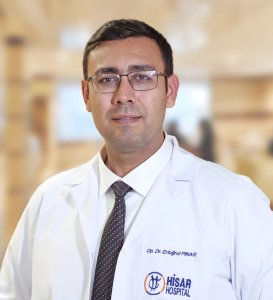
Ertugrul Pinar


VM Medical Park Pendik Hospital
Erhan Arslan



Istanbul Florence Nightingale Hospital
Sefik Igdem




Get a Medical Assessment for Astrocytoma Treatment in Turkey: consult with 34 experienced doctors for Australian patients now
View all Doctors
Bulent Karagoz
Specializes in tumor biology and immunotherapy – Dr. Bülent Karagöz focuses on advanced cancer treatments at Anadolu Medical Center.
- 33 years in medical oncology with a focus on astrocytoma
- Professor at Istanbul Okan University Faculty of Medicine
- Member of the Turkish Medical Oncology Association
- Published over 40 research papers in cancer studies
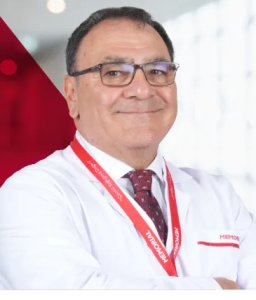
Ertugrul Pinar
Dr. Ertugrul Pinar is a neurosurgeon at Hisar Hospital Intercontinental in Istanbul. He treats adult and pediatric patients with complex brain and spine diseases. Dr. Pinar focuses on brain tumors, vascular aneurysms, and skull base pathologies. He works at a JCI-accredited hospital that serves over 500,000 patients annually.
- Performs specialized procedures including transnasal tumor resection and brain aneurysm repair.
- Treats a wide range of conditions like pituitary adenomas and arteriovenous malformations.
- Expertise covers both surgical oncology and reconstructive spine surgery for herniated disks.
- Provides care for pediatric neurosurgical cases including hydrocephalus and shunt surgeries.
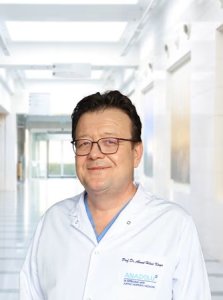
Ahmet Hilmi Kaya
Dr. Ahmet Hilmi Kaya is a professor of neurosurgery at Anadolu Medical Center in Istanbul. He specializes in functional neurosurgery and deep brain stimulation (DBS) for movement disorders. Dr. Kaya previously led a Parkinson’s disease research project at Ondokuz Mayıs University. He earned the Aysima Altınok Thesis Award from the Turkish Neurosurgical Society.
- Performs complex brain tumor removals and skull base surgeries.
- Treats spinal conditions including tumors, stenosis, and herniated discs.
- Completed specialized observerships in cellular neuroscience at Maastricht University.
- Works at Anadolu Medical Center, an affiliate of Johns Hopkins Medicine.
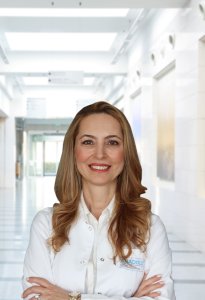
Banu Atalar
Dr. Banu Atalar is a professor and radiation oncologist at Anadolu Medical Center. She is an Honorary Fellow of the American College of Radiology (H.FACR). She completed a clinical research fellowship in stereotactic radiosurgery at Stanford University. Stereotactic radiosurgery and MR-guided adaptive SRS make up 75% of her clinical practice.
- President of the Turkish Society for Radiation Oncology.
- Chair of the ESTRO National Societies Committee.
- Recipient of the ASCO International Development and Education Award.
- Author of over 70 international peer-reviewed publications.
Reviews about Bookimed: Discover Patients' Insights
All reviews


Share this content
Video Stories from Bookimed Patients
 Anna Leonova
Expert Overview about Astrocytoma Treatment in Turkey
What should I prepare before travelling to Turkey for an astrocytoma consultation?
Preparing for an astrocytoma consultation in Turkey requires gathering original MRI and CT imaging files on a USB or CD. Patients should compile pathology reports detailing IDH mutations and MGMT methylation. Bring a full list of current medications, specifically anti-seizure drugs and corticosteroids, so specialists can safely plan neurosurgery.
- Medical imaging: Bring original MRI and CT files, as reports alone are insufficient for neurosurgical planning.
- Molecular pathology: Include reports on genetic markers. These determine eligibility for targeted therapy and chemotherapy.
- Treatment timeline: Document all prior surgeries, radiation doses, and chemotherapy cycles to guide future protocols.
- Physical documents: Carry printed pathology slides and discharge summaries to avoid delays in diagnostic verification.
Bookimed Expert Insight: Turkish neuro-oncology centres, such as Hisar Hospital Intercontinental, often include postoperative brain CTs in craniotomy packages. When preparing your budget, note that standard packages around A$7,800 to A$17,800 frequently bundle ICU stays and transfers. This helps patients avoid separate billing for critical recovery phases after complex brain tumour removals.
Patient Consensus: Patients note that Turkish specialists like Dr Mustafa Onaz often perform complex, multi-hour operations to achieve total tumour removal. They emphasise that having a dedicated coordinator helps manage the high-level service and communication during these intensive stays.
What advanced surgical technologies are used for astrocytoma removal in Turkey?
Turkish neurosurgery centres use advanced intraoperative tools like intraoperative MRI (iMRI) and neuronavigation to remove astrocytomas safely. These JCI-accredited hospitals specialise in maximal resection while preserving brain function. Specialists often perform awake craniotomies and fluorescence-guided surgery to identify tumour margins in real time.
- Intraoperative MRI: Allows real-time scanning during surgery to ensure the entire tumour is removed.
- Neuronavigation systems: Provide 3D GPS-like tracking to map astrocytoma locations relative to healthy tissue.
- Fluorescence-guided surgery: Uses specialised dyes that make malignant cells glow under specific surgical microscopes.
- O-arm imaging: Dr Nejat Akalan at Medipol Mega uses this for precise 3D intraoperative imaging.
- TrueBeam STx: Clinics like Memorial Antalya use this for targeted radiation of residual tumour nodules.
Bookimed Expert Insight: While many centres claim high technology, surgeons like Dr Ertugrul Pinar at Hisar Hospital have performed over 900 brain procedures. Experience counts because advanced tools like iMRI are most effective when handled by high-volume specialists. Patients should prioritise clinics with both JCI accreditation and documented surgeon case volumes over 500 procedures.
Patient Consensus: Patients in Turkey highlight that intraoperative MRI and brain mapping provide peace of mind. They note these tools help surgeons achieve total removal without affecting speech or movement. Many feel the high level of service and specialist attention, especially from doctors like Dr Mustafa Onaz, is life-saving.