 Laparoscopic Multiple Myomectomy at JCI-Accredited Hospital — VIP Transfer
Advertiser Disclosure
Last updated: 19/11/2026
3 Best Laparoscopic myomectomy Clinics in Turkey — AUD Prices
Want to explore more options? You can also browse all 3 clinics below.

85 %
patient recommendation
7 K+
patients
Meet the experts behind this page
Medically reviewed by
Abdulcabbar Kartal
Authored by Anna Leonova
Head of Content Marketing Team
How it works
We've transformed the clinic search process, making it simple, fast, and personal.
Answer a few questionsTake a short quiz to share your Laparoscopic myomectomy goals.
Get personalised offers3 clinics, handpicked based on your answers, provide tailored treatment plans and quotes.
Choose the best optionCompare offers and choose the clinic that suits you best.
You can also browse all 3 clinics below.
1M+ patient inquiries
32+ countries
3,323 partner clinics
13,325 certified doctors
How Much Does Laparoscopic myomectomy Cost in Turkey in AUD?
Laparoscopic myomectomy in Turkey typically costs from AUD $7,400 to AUD $13,100. The final price depends on fibroid complexity, surgeon experience, and the chosen hospital tier in hubs like Istanbul or Antalya. Standard Turkish packages often include VIP transfers, preoperative blood tests, gynaecological consultations, and follow-up examinations.
- Multiple fibroid removal: typically adds 15–20% to the base surgical cost due to extended theatre time.
- Robotic-assisted approach: often carries a premium of 20–30% compared to standard laparoscopic techniques.
- Hospital tier: premium JCI-accredited facilities in Istanbul generally charge 15% more than regional clinics.
- Diagnostic inclusions: comprehensive packages often bundle pelvic MRI and transvaginal ultrasounds to ensure surgical precision.
Bookimed Expert Insight: Choosing a surgeon with high procedure volumes offers the best value. Dr. Esra Tustas Haberal has performed over 900 myomectomies, and her packages start around A$6,104. For patients seeking the latest technology, Assoc. Prof. Dr. Esra Ozbasli offers da Vinci-certified robotic surgery. These packages often include 5-star accommodation and VIP transfers, providing a premium experience that remains significantly cheaper than Australian private healthcare.
| Turkey | Thailand | |
|---|---|---|
| Laparoscopic myomectomy | from AUD $7,400 | ≈ AUD $6,300 |
Data verified by Bookimed as of November 2026, based on patient requests and official quotes from 44 clinics worldwide. Median costs are based on real invoices (2025–2026) and updated monthly. Actual prices may vary.
Best Laparoscopic myomectomy Clinics in Turkey for Australians: 3 Verified Options and AUD Prices
Laparoscopic Multiple Myomectomy at JCI-Accredited Hospital — VIP Transfer


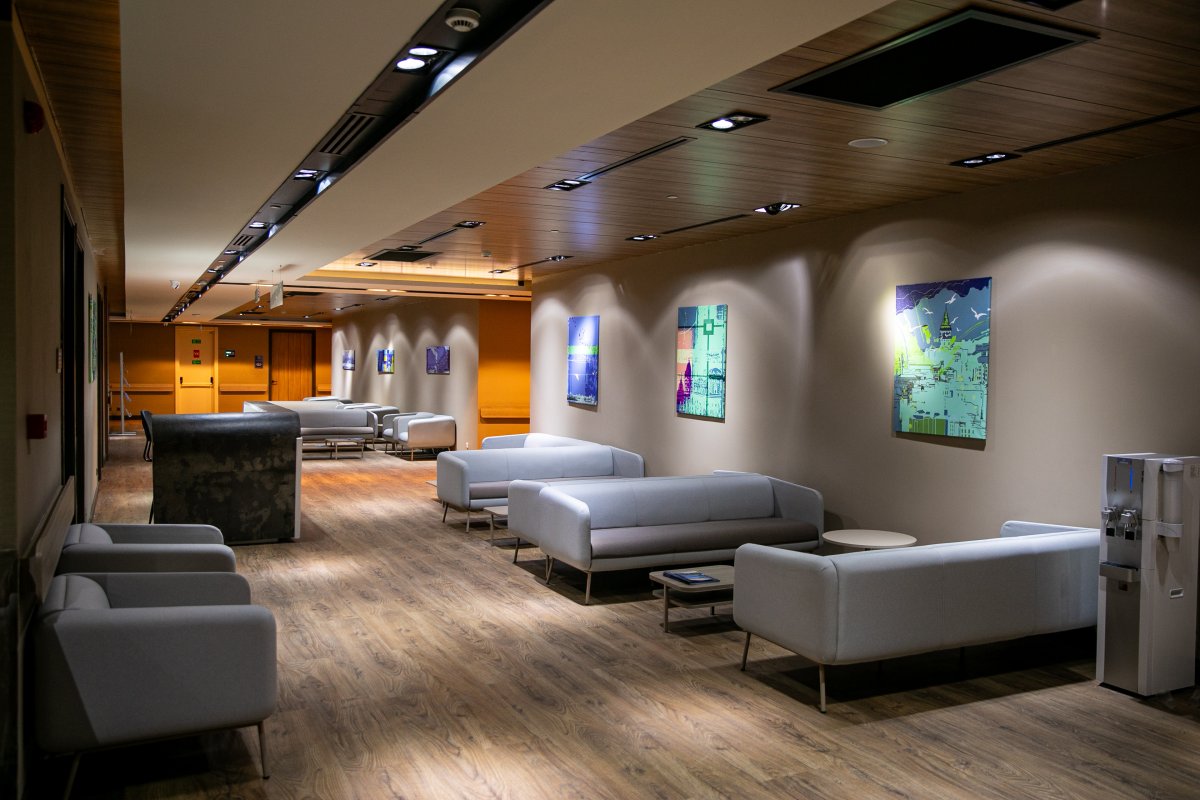 Laparoscopic myomectomy surgery Package
 Laparoscopic Myomectomy by Da Vinci-Certified Surgeon
Laparoscopic myomectomy Overview in Turkey
Takeaways
Related procedures & Costs
How it works
Benefits
Payment
patients recommend -
85%
Requests processed - 7852
Verified patient reviews - 20
Bookimed fees - $0
Types of Laparoscopic myomectomy
How to find best solution with Bookimed?
Check available options for your case on the website.
Request a free consultation with documents assessment.
Download your medical records and describe your needs.
Receive customised free treatment plans with prices and details.
Compare them and finalise your choice.
Agree the date for your upcoming clinic visit.
Arrive and pay at the clinic. Bookimed fees are $0 for you.
From start to finish, the Bookimed coordinator keeps you safe and comfortable during your medical journey.
100% free, non-binding assessment of your medical records
Instant FREE personalised treatment plans to make the right choice
Expert guidance in choosing the perfect Surgery doctor and clinic.
Special packages and exclusive prices for our patients.
24/7 Bookimed guidance at no cost, guaranteed.
Hassle-free translation of your medical documents for clinics.
Bookimed's multilingual team ensures comfortable communication.
Bookimed ensures transparent and secure payments. Patients pay at the clinic with no additional fees.
Available Payment Methods:
How to Secure an Appointment:
1. Documents: Passport and ticket copies.
or
2. Deposit:
- Bookimed deposit: $200 or €200.
- Clinic deposit: Pay a set percentage in advance.
For more information, see our Payment Policy
Our Trusted Doctors for Australian Patients
View all Doctors
verified
Esra Ozbasli
23 years of experience
Over 23 years of OB-GYN expertise – Assoc. Prof. Ozbasli specializes in minimally invasive procedures like laparoscopic myomectomy.
- Trained in obstetrics and gynecology at Zeynep Kamil Women and Children Diseases Hospital
- Certified in robotic surgery using the da Vinci system since 2013
- Associate professor at Acıbadem University
- Published numerous articles in respected international scientific journals

verified
Gokhan Demirayak
21 years of experience
Dr. Gokhan Demirayak is a Gynecologist and Gynecological Oncologist with 17 years of experience. He specializes in Urogynecology, Hysterectomy, Gynecological oncology, Genital aesthetics, and Laparoscopic surgeries.

verified
Veysel Sal
16 years of experience
Dr. Veysel Sal is a professor and gynecologic oncology surgeon at Memorial Bahçelievler Hospital. He specializes in the surgical treatment of female reproductive system cancers. Dr. Sal treats complex gynecological conditions in Istanbul. He works at a JCI-accredited facility recognized for its superior safety standards.
- Specializes in obstetric care and gynecological oncology surgery.
- Served as a specialist at Sisli Hamidiye Etfal Training and Research Hospital.
- Practices at a clinic holding ISO and JCI quality certificates.
- Focuses on surgical oncology treatments for varied gynecological conditions.

verified
Cem Yalcinkaya
20 years of experience
Dr. Cem Yalcinkaya specializes in laparoscopic myomectomy at Anadolu Medical Center, offering minimally invasive solutions for fibroid treatment.
- Experienced in performing advanced laparoscopic procedures
- Focuses on preserving fertility while removing fibroids
- Works at a leading medical center with state-of-the-art facilities
Video Stories from Bookimed Patients
Valentina
Traveling from Spain to Istanbul for a liposuction was a life-changing experience.
Procedure: Liposuction
Randolph
Stay strong, stay informed, and never underestimate the power of cutting-edge treatments and a solid support system.
Procedure: Radioembolization for liver cancer
Reviews about Bookimed: Discover Patients' Insights
All reviewsУктам • Online Consultation with Vascular Surgeon
Uzbekistan
10 Jan 2023
"I especially want to note that everything that was done at the highest level is mainly the merit of an employee named Zakhida
On the recommendation of Bookimed, I underwent a medical examination at the Anadolu Medical Center (Turkey). Why did you choose the Anadolu clinic? Because it was the only clinic recommended to me by Bookimed that responded very quickly to my requests, and only this clinic developed and sent me a program for my examination. Two other clinics, such as Medipol, limited themselves only to gratitude that I contacted them, and the Şişli Memorial clinic remained silent until the end without any feedback. I will not dwell on the provision of the Anadolu clinic with the most modern medical equipment, since many Turkish clinics today are equipped with the most modern equipment. I personally became convinced of this at the stage of choosing a clinic, when I got acquainted with the equipment of many clinics. The qualifications of Turkish medical specialists are generally high and they are really professionals in their field. But there is one very important point - the ability to plan and organize medical examinations. For a patient who comes to such institutions with great hopes, any attention or inattention rendered affects his psychological and moral state, and it naturally depends on this what attitude he will determine and form for himself towards the clinic itself. To be in constant contact with the patient from the moment of his desire to visit the clinic, prepare in every possible way for arrival, prepare medical data and analysis results, assist in booking a hotel, meeting at the airport upon arrival, exceptionally efficient planning of all examinations, eliminating any inconvenience for the patient from - for waiting in queues for tests, undergoing procedures and consulting a doctor and much more, this is a huge advantage of the Anadolu clinic over other clinics. I especially want to note that everything that was done at the highest level is mainly the merit of an employee named Zakhida. (international department of the clinic). Professionalism, an individual approach to each patient, impeccable organization of the entire work process, endless energy, high tolerance, femininity, pleasant appearance and many other positive qualities of a person - said about Zakhida. Zahida, please accept my deep gratitude and wish you all the best. Always remain the same joyful, radiant, beautiful and feminine! I also want to thank other employees of the Anadolu clinic, doctors, nurses, translators - thanks to your conscientious work and your high professionalism, I received a quality medical service. . I thank the Bookimed employees (Vladimir, Varvara) for your attention and for the excellent organization of the survey. All the best to you and your loved ones! With great respect, Uktam Eshmuradov (Uzbekistan).
About Bookimed service
Certainly!
Alex • Laparoscopic tubal ligation
United Kingdom
14 May 2026
Based on my experience, I'd give this clinic a 10 for a recommendation
If you're considering this procedure, I found the process here to be very straightforward. The surgeon used bipolar cautery for the tubal ligation, leaving me with just three small holes that are all healing cleanly. It was a relief. The initial abdominal bloating went away completely, which was my main physical discomfort. My biggest recovery challenge has honestly been the fatigue that lingers, so be prepared to take it easy for a bit longer than you might think. The surgeon and staff were competent and professional. Based on my experience, I'd give this clinic a 10 for a recommendation.
The coordinator was very helpful, staff were knowledgeable and attentive, care was to a high standard.
English communication could have been better at the hospital itself
Erna Johnsen • Consultation with a surgeon
Norway
1 Nov 2024
Jeg er så fornøyd
Fantastisk bra opplevelse..Blei henta på flyplassen kjørt til klinikken. Hotellet ligger i nærheten .Det var trygt å man har kontakt med klinikken undere hele oppholdet .Dette kan jeg virkelig anbefale. Jeg hadde neck lift å hadde planlagt å ta nedre facelift men legen anbefalte å heller ta over og under øye da jeg er 55år å hadde tunge øyelokk. .Er så utrolig glad for jeg lyttet til hans anbefalinger å det kostet mindre en forventet.. Resultatet bare nå etter 11dager er utrolig.Jeg er så fornøyd..
Tryggheten etter operasjonen å hotellet i nærheten jeg kunne ta kontaktes 24t i døgnet hvis jeg hadde spørsmål
Litt bedre engelsk talende sykepleier . Men det gikk fint med Google translate så jeg hadde ingen problemer med å bli forstått
About Bookimed service
God kommunikasjon kjappe svar å behjelpelig med alle spørsmål
Anonymous • Tummy Tuck and Liposuction
Ukraine
17 Sept 2023
Everything went very well
At the Dr.Med clinic, diastasis suturing, 360 liposuction, and abdominoplasty were performed. Before surgery, consult with a Doctor. Operated on Op. Dr. Hakan TEYMUR. Everything went very well. The stay at the clinic was with high quality postoperative care. The doctor is very professional, attentive and responsive. Our coordinator was Narmina. Also always in touch. All issues were resolved quickly and clearly. Special thanks to Muhlise, Semra and the whole team.
About Bookimed service
Thanks to Bookimed and coordinator Anna, everything I wanted was done perfectly. Starting from communicating with Ney at the initial stage, searching for a clinic and a Doctor, signing an agreement with the clinic and transferring all my questions to the coordinator in Turkey Narmin. Thank you Bookimed! I recommend!
Anonymous • Hemorrhoids
20 July 2022


I thank the staff of the clinic, Professor Ilknur Bayraktar and, of course, the Bukmed team represented by Maria and translator Gulzar for their professionalism
In July 2022, she had a consultation, examination and surgery at the Memorial Clinic. I thank the staff of the clinic, Professor Ilknur Bayraktar and, of course, the Bukmed team represented by Maria and translator Gulzar for their professionalism. Everything went smoothly. Chambers at the level of 5 star hotels. 3 meals a day, comfortable bed, free Wi-Fi, TV, nurse and nurses are very attentive.
About Bookimed service
Satisfied
Anonymous • Testicular prosthesis
United States of America
20 Jan 2026
I felt safe and comfortable, and I would like to thank everyone involved
From the moment I entered the clinic, I was greeted with great care. My doctor, Prof. Barış, listened attentively during the examination, and the translator, Mr. İbrahim, explained the entire process clearly. My post-treatment check-ups were also conducted regularly. I felt safe and comfortable, and I would like to thank everyone involved.
Anonymous • Hemorrhoids
31 Jan 2022
Very satisfied! Thanks again!
Very satisfied! Thanks for the service, you helped me a lot, thank you for that! I don’t feel at all that they did vaginoplasty and removed hemorrhoids. I had 2 operations together! Doesn't hurt anywhere! After the operation, I spent the night in the clinic and was released! Thanks again!
About Bookimed service
Yes, I'm very pleased
Vitalii Shvydenko • Inguinal hernia surgery
Georgia
10 Mar 2026
I am satisfied with the final result
The treatment went well. Everything was as discussed in the preliminary correspondence. I am satisfied with the final result.
There is a list of recommended hotels near the clinic. You can choose based on your budget.
Transfer from/to the airport, from the hotel to the clinic and back.
Removed a mole with histology. Everything went quickly and painlessly. Histology took 8 days.
About Bookimed service
This is not my first time here.
They always listen to requests and strive to find the best option. There are no pushy suggestions, only searches based on your request.
They respond quickly.
Anonymous • Hemorrhoids
Ukraine
23 Mar 2025
But most importantly, it was a professional doctor, a huge thank you to her and all the staff who were involved in my treatment
Excellent clinic, very professional doctors and nurses. The operation was successful, the care was very good. The rooms were comfortable, the food was decent. But most importantly, it was a professional doctor, a huge thank you to her and all the staff who were involved in my treatment.
Doctors, nurses, comfortable room, decent care, outcome of treatment.
-
About Bookimed service
They are quick to get in touch, provide the right information, and accompany the treatment.
Tina Spruell • Surgery
United States of America
20 Oct 2025
She was what made our whole experience a success
She was Avialable at every Hour we bothered her. She was Very Friendly and sweet. We enjoyed her company and she made us feel Like Family. SHe was what made our whole experience a Success. The Professor was the Exact Same. They made my Procedure worth it.
Every part of the Process was Good when it started to GREAT by the Time the Surgery started to the Care I received before and after the Surgery itself.
My Only Complaint was not all the Staff Spoke English. But we made it.
About Bookimed service
The Visit was Overwhemengly Good that the litle Little issues we had been written over by the success of the Staff and Great Dr's.
Anonymous • Keloid scars
Uzbekistan
25 July 2022
Thanks to the doctors and coordinator Evgeniy
We turned to Bookimed for help. We were advised by Memorial Shishli. We are very grateful to them. We were well received, organized a transfer and a hotel. Thanks to the doctors and coordinator Evgeniy. They justified our trust in them.
About Bookimed service
Yes, we are satisfied and grateful to Bookimed and the doctors. Thanks to coordinator Evgeniy for your concern.
Дилабар • Online Consultation with Neurosurgeon
Uzbekistan
27 Sept 2022
Thanks to the Bookmed staff
Thanks to the Bookmed staff. I haven't been to the clinic yet. Get an online consultation. Very responsive, punctual and polite staff. Very responsible. Thanks to Maria and Alena. It was nice to deal with.
Matvey Shevtsov • Circumcision
Mexico
5 June 2025
The doctor is wonderful
We did a circumcision operation on my son. The doctor is wonderful. One of the best surgeons in Turkey. An interpreter was provided and the whole team was very good. Enjoyed the whole experience. 😊
The level and competence of the doctor and medical staff.
Pavel Шевченко • Inguinal hernia surgery
Kazakhstan
19 June 2024
I did not even have time to be scared
Good surgeon.Professional in his work.good staff.the operation was done well I did not even have time to be scared .the clinic is clean with modern equipment.corresponds to European standards.
I liked everything doctor, staff, conditions, attitude, the clinic itself, I do not see any disadvantages.
Anonymous • Lipoma Removal
Canada
29 Jan 2023
I highly recommend them
I highly recommend them they were very professional.
About Bookimed service
Yes very satisfied . Thank you .
Share this content
Updated: 19/11/2026
Authored by
 Anna Leonova
Head of Content Marketing Team
A certified medical writer with 10+ years of experience, developed Bookimed’s trusted content, backed by a Master’s in Philology and medical expert interviews worldwide.
Reviewed by Bookimed Medical Advisor

Abdulcabbar Kartal
Colorectal surgeon
Assoc. Prof. Dr. Abdulcabbar Kartal is a colorectal and general surgeon specializing in HIPEC and bariatric surgery. He is certified by the European Society of Coloproctology (FEBS-C) and has performed over 500 bariatric surgeries.
This page may feature information relating to various medical conditions, treatments, and healthcare services available in different countries. Please be advised that the content is provided for informational purposes only and should not be construed as medical advice or guidance. Please consult with your doctor or a qualified medical professional before starting or changing medical treatment.
FAQ about Laparoscopic myomectomy in Turkey
These FAQs come from real patients seeking medical assistance through Bookimed. Answers are given by experienced medical coordinators and trusted clinic representatives.
What is the procedure for a laparoscopic myomectomy in Turkey?
Laparoscopic myomectomy in Turkey is a minimally invasive surgery to remove uterine fibroids. It is performed under general anaesthesia. Surgeons use 3–4 small abdominal incisions to insert a laparoscope and specialised tools. This fertility-sparing procedure preserves the uterus. It allows for a recovery period of 2–3 weeks.
- Technique variety: Clinics offer standard laparoscopy and robotic-assisted surgery via the da Vinci system.
- Hospital stay: Most patients remain in hospital for 1–2 nights for monitoring.
- Initial preparation: Pre-op involves blood tests, ultrasound, and consultations with a gynaecologist and anaesthetist.
- Fibroid extraction: Surgeons use morcellation to break larger fibroids into pieces for easier removal.
Bookimed Expert Insight: Many centres focus on single fibroid removal. However, specialists like Dr. Esra Tustas Haberal at Hisar Hospital Intercontinental have performed over 900+ myomectomies. This experience is critical for multiple myomectomy cases needing complex uterine reconstruction for future fertility.
Patient Consensus: Patients travelling to Turkey value the coordination between preoperative imaging and surgery. The inclusion of VIP transfers and language assistance makes the recovery process feel more supported.
Can I have children after undergoing a laparoscopic myomectomy in Turkey?
Women can conceive after a laparoscopic myomectomy in Turkey. The procedure removes fibroids while preserving the uterus and fertility. Success rates for pregnancy range from 60% to 90% for those without other fertility issues. This makes it a preferred option for maintaining reproductive health.
- Fertility preservation: Unlike a hysterectomy, this surgery keeps the uterus intact for future motherhood.
- Healing timeframe: Surgeons typically recommend waiting 3–6 months before attempting conception for uterine healing.
- Expert specialists: Doctors like Dr Esra Tustas Haberal have performed 900+ successful myomectomy procedures.
- Delivery planning: Depending on incision depth, a scheduled caesarean section may be recommended later.
Bookimed Expert Insight: Data shows high demand for robotic-assisted myomectomy at centres like Central Hospital. This provides precision for deep fibroids. Patients should ask their surgeon for a report specifying the number of uterine layers sutured for their local obstetrician.
Patient Consensus: Many women successfully conceive in Turkey after receiving the full operative report for their Australian doctors. They suggest getting clear imaging to confirm healing before trying for a baby.
What are the common risks or recurrence rates for fibroids treated via laparoscopic myomectomy in Turkey?
Laparoscopic myomectomy in Turkey carries a five-year recurrence risk of up to 51%. Roughly 21% of patients experience new fibroid growth. Risks include uterine rupture during future pregnancy and conversion to open surgery. Success is managed by surgeons at JCI-accredited facilities using robotic or keyhole techniques.
- Long-term recurrence: New fibroids develop in approximately 21.4% of patients within five years of surgery.
- Multiple fibroids: Recurrence risk is higher for patients with multiple growths or those aged 30–40.
- Surgical conversion: A rare possibility exists that laparoscopic surgery must becomes open surgery for safety.
- Uterine rupture: Future pregnancy carries a 1% rupture risk. This often requires a planned C-section.
- Reintervention rate: Roughly 20.6% of patients may require a second procedure within seven years.
Bookimed Expert Insight: Surgeon volume is the strongest indicator of safety in Turkey. Dr Esra Tustas Haberal at Hisar Hospital Intercontinental has performed 900+ myomectomies. This level of repetition lowers the chance of surgical complications. Many Istanbul clinics also offer the da Vinci robotic system for precision during complex removals.
Patient Consensus: Patients suggest asking exactly how many fibroids were removed versus left behind. This helps you understand future growth risks. Confirming a follow-up plan for imaging and telehealth after returning to Australia helps manage long-term recovery.
How do I choose a qualified surgeon for a laparoscopic myomectomy in Turkey?
Choosing a qualified surgeon for laparoscopic myomectomy in Turkey involves several steps. Verify board certification in gynaecology and confirm experience in minimally invasive techniques. Look for specialists at JCI-accredited facilities with high procedural volumes. They should also have documented expertise in robotic-assisted systems like da Vinci.
- Surgical volume: Favour surgeons like Dr. Esra Tustas Haberal, who has performed 900+ myomectomies.
- Board certification: Verify consultants at Memorial Sisli Hospital hold JCI-recognised and international certifications.
- Robotic expertise: Select specialists with da Vinci training, such as Dr. Esra Ozbasli in Istanbul.
- Hospital infrastructure: Check that the facility has operating theatre backup for potential open surgery transitions.
- English proficiency: Prioritise surgeons like Dr. Cem Yalcinkaya who communicate fluently with international patients.
Bookimed Expert Insight: Data shows 1-day hospital stays are standard in basic packages. However, 2-night inclusions often indicate more comprehensive monitoring. Large centres like Istanbul Florence Nightingale Hospital serve 300,000+ patients annually. These facilities provide deeper infrastructure for complex fibroid cases than smaller clinics.
Patient Consensus: Seek surgeons who provide specific case numbers for myomectomy rather than general laparoscopy. This ensures higher skill levels. Experience with specimen extraction and uterine repair is vital for those planning future pregnancies.
What is the typical recovery period following a laparoscopic myomectomy in Turkey?
Most patients recover from laparoscopic myomectomy in Turkey within 4 to 6 weeks. A return to light activities is typically possible after 14 days. This approach uses small incisions, allowing for a shorter 1 to 2-day hospital stay compared to open surgery.
- Hospitalisation: Most clinics include 1 or 2 nights in a private hospital room.
- Initial activity: Walking is encouraged within 24 hours to help prevent blood clots.
- Physical restrictions: Avoid lifting anything over 4.5 kg for the first 4 weeks.
- Strenuous exercise: Surgeons recommend waiting 6 to 8 weeks before resuming high-impact workouts.
- Back to work: Patients with desk jobs often resume duties within 10 to 14 days.
Bookimed Expert Insight: Many clinics offer a 1-day hospital stay. Choosing a package with 2 nights, like those at Liv Hospital Ulus, provides extra monitoring. This helps manage the initial bloating and fatigue patients often experience in the first 48 hours.
Patient Consensus: Initial recovery involves manageable pain and bloating. However, patients often feel a false sense of energy. They suggest pacing activities carefully, as exhaustion can return quickly during the flight home to Australia.
What are the eligibility criteria for a laparoscopic myomectomy in Turkey?
Eligibility for laparoscopic myomectomy in Turkey requires symptomatic fibroids small enough for minimally invasive removal. Candidates generally seek to preserve fertility or avoid a hysterectomy. Surgeons typically perform the procedure if fibroids are under 10 cm and fewer than five exist.
- Fibroid size: Growths usually must be under 10 cm for safe laparoscopic removal.
- Uterine volume: The total uterine size should be smaller than 14 weeks of pregnancy.
- Fibroid location: Ideally suited for intramural or subserosal fibroids within the uterine wall.
- Fertility goals: Suitable for patients wishing to conceive or keep the uterus intact.
- Clinical symptoms: Eligibility depends on heavy bleeding, pelvic pain, or fibroid-related infertility.
Bookimed Expert Insight: Turkish centres like Hisar Hospital Intercontinental often accept complex cases for laparoscopic removal. Dr. Esra Tustas Haberal has performed 900+ myomectomies. This high volume allows surgeons to remove multiple fibroids. Less experienced clinics might deem these unsuitable for laparoscopy.
Patient Consensus: Women choosing Turkey find doctors accommodate specific fertility goals. Many clinics also offer robotic-assisted options. Patients appreciate that pre-operative testing and specialist consultations are often bundled into one upfront price.
What documentation should I provide when travelling to Turkey for a laparoscopic myomectomy?
Patients travelling to Turkey for a laparoscopic myomectomy must provide a valid passport and a medical invitation letter. They should also provide recent pelvic imaging reports. Formal documentation helps with smooth customs entry. It also allows surgeons to confirm the size and location of uterine fibroids before theatre.
- Travel documents: Passport needs 6 months validity from arrival and a printed e-visa.
- Clinical records: Provide recent ultrasounds or MRI scans to confirm fibroid mapping.
- Medication proof: Carry doctor-signed prescriptions for any personal medications in original packaging.
- Package confirmation: Bring documentation of included services like VIP transfers or hospitalisation.
- Financial evidence: Proof of payment or guarantee from specialised medical insurance providers.
Bookimed Expert Insight: While basic packages start from $4,900, higher-tier options at clinics like Liv Hospital Ulus often include 6 nights of hotel stay. Choosing these bundled packages simplifies travel. They provide pre-arranged accommodation documentation required for visa applications and entry.
Patient Consensus: Patients in Turkey find having all digital records on a tablet helpful during consultations. They often recommend printing a hard copy of the clinic invitation for customs officers.